The Technology Is Not the Problem
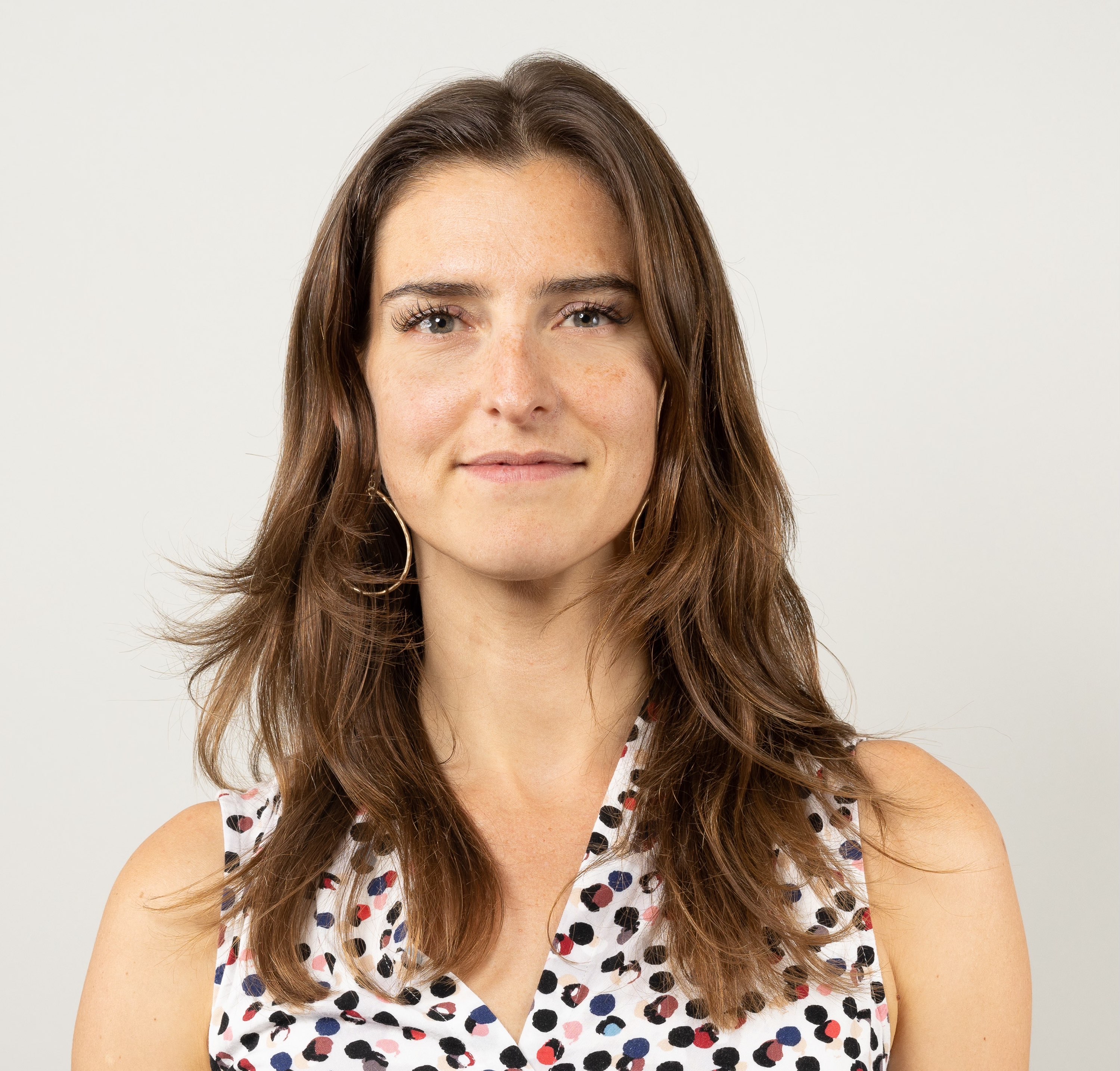
Dr. Bob Gabbay on what's actually standing between people with diabetes and better health — and why the last mile is the hardest mile

In 1993, it was not yet proven that better blood glucose control prevented the complications of diabetes. There were researchers on both sides. Some believed complications were inevitable regardless of glucose management. Others believed tighter control made a difference, but the clinical trial data hadn't confirmed it.
When the results of the Diabetes Control and Complications Trial were announced at the ADA Scientific Sessions, there was a hush in the room. Elliot Joslin, the founder of the Joslin Diabetes Center, had long believed tight glucose control mattered — he'd tracked his own patients for decades and had his own evidence, just not a clinical trial. When the results came in, everyone at the Joslin Diabetes Center was wearing a button with Elliot Joslin's face on it.
It said: "I told you so."
That story — the decades-long conviction, the institutional belief held before the data existed, the moment of vindication — captures something essential about how the diabetes field works. Progress is slow, conviction precedes proof, and the people closest to patients often know things the trials haven't caught up to yet.
[00:02:45] Dr. Bob Gabbay has been in this field long enough to have worn that button. A Harvard professor, former Chief Medical Officer of the Joslin Diabetes Center, and most recently Chief Scientific and Medical Officer of the American Diabetes Association — an organization that convenes over 10,000 researchers, clinicians, and scientists annually — Dr. Bob has spent his career moving from individual patient care to population health to global scientific leadership, each role a deliberate step toward greater impact.
[00:21:25] I met Dr. Bob at D-Data, a conference focused on diabetes technology and patient-driven innovation. We've stayed in touch since. This conversation covered a lot of ground: the arc of diabetes technology over his career, why the tools that exist aren't reaching the people who need them, how we measure outcomes poorly, and what it would take to actually close the gap.
Seven Turns
[00:03:25] Dr. Bob grew up in New York City with albinism. When he was young, schools wanted to place him in a special school. His parents insisted on a regular public school. He describes that as one of the seven turns — the Native American notion of the moments that made you who you are.
He became a science geek. Chemistry sets at home. His father was a professor who could get chemicals from the lab. At one point the chemistry professor called and said the different ingredients he was bringing home were actually making gunpowder.
[00:05:05] In high school he joined the Junior Academy of Sciences at the New York Academy of Sciences and created a booklet of summer science opportunities for high school students across the five boroughs — cold-calling every university chemistry and physics department in New York City to compile the listings. He didn't realize it at the time, but organizing that booklet was a smaller version of what the ADA Scientific Sessions does: convening a community around shared opportunities.
[00:07:00] He went to McGill for undergraduate biochemistry, then a PhD in biochemistry at the University of Wisconsin. His first published paper in a high-impact journal earned a party. The second, a little less celebration. By the fourth, he realized he needed to get closer to people. So he applied to medical school — not, he told me, with any plan to actually see patients.
"I remember telling one interviewer: I don't plan on doing clinical work at all."
Then he started seeing patients and realized he loved it.
The Arc of Diabetes Technology
[00:14:45] As Chief Medical Officer at the Joslin Diabetes Center, Dr. Bob cared for patients with 50 or more years of diabetes experience — people who remembered sharpening needles on stones and comparing urine colors in a test tube to estimate glucose. The distance between that and a continuous glucose monitor is almost incomprehensible.
[00:17:55] The CGM is, in his telling, one of the genuine turning points in diabetes care. Every patient who got one — some reluctantly — told him it changed their life. Knowing what your glucose is at any given moment, seeing trends in real time, is a different category of information than a quarterly lab value.
Which brings us to the HbA1C question.
[00:17:15] HbA1C — the measure that anchors almost every diabetes clinical trial, regulatory submission, and payer decision — is a 90-day average. Glucose sticks to hemoglobin in red blood cells, and given the lifespan of those cells, it reflects roughly three months of ambient glucose levels. The 1993 DCCT trial that vindicated Elliot Joslin's button was built on A1C.
But an average can hide a lot. You can hit the same A1C number with glucose levels that barely fluctuate or with glucose levels that swing dramatically — very high and very low. A low blood glucose can be life-threatening. A1C doesn't distinguish between those two patients.
[00:18:45] Time in range does. It takes continuous glucose monitoring data and categorizes it into ranges: how much time is someone spending at healthy levels, how much time too high, how much time too low. And those values correlate with complication risk in ways that A1C only approximates. The more time in the healthy range, the less likely someone is to develop blindness or kidney failure.
I pushed Dr. Bob on whether time in range should replace A1C as the primary outcome measure for drug approvals. He's had that exact conversation with the FDA.
[00:19:44] "The question would be: could you approve a treatment based on time in range? We're not quite there yet, but the FDA's been very open to thinking about this." A consensus group has already worked through the definitional questions — what counts as time in range, how much of a difference actually matters clinically. The regulatory groundwork is being laid. His view: they're complementary measures, not interchangeable. A1C over three months, time in range over two weeks. In clinic, he looks at both.
What's Not Solved
[00:29:40] Diabetes technology has come a long way. Closed loop insulin delivery systems — where a CGM feeds glucose data directly to an insulin pump, which adjusts delivery automatically — exist on the market today. The DIY movement that built them, We Are Not Waiting, hacked into CGMs and pumps, developed algorithms, and shared them open source before any commercial product existed. Dr. Bob had patients using DIY closed loop systems before FDA approval. One of them had an A1C of 5.5 — non-diabetic range — with no hypoglycemia.
"All right," he told me. "I guess you did it."
That DIY work, he believes, lit a fire that contributed to the first commercial automated insulin delivery system getting approved — on a smaller study than would normally have been expected.
[00:29:45] But the remaining problems are stubborn. The two big ones:
Carbohydrate estimation. Every current automated insulin delivery system requires the person to announce a meal and estimate the grams of carbohydrate they're about to eat. Ordering pasta at a restaurant. Estimating corn starch in Chinese food. Not everybody has the numeracy for it. The algorithm can't pre-dose insulin quickly enough without that information because insulin absorption is slow relative to how fast glucose rises after eating. Photo-based carb estimation tools exist but struggle with portion size — a small cookie and a large cookie look the same in a picture. The next wave, already in the DIY community, is systems that learn carb ratios automatically without manual input.
Activity management. When you're active, muscles take up glucose and blood levels drop. The algorithm can stop insulin delivery, but insulin already in the subcutaneous tissue keeps acting for hours. Managing that lag is the second major unsolved technical challenge.
[00:33:05] And then there are alarms. "If you talk to people with diabetes, what do they want? They want to not think about their diabetes." Alarms for highs, lows, trends, required actions. The aspiration is a driverless car. "I don't have to do anything. I just get in the car and it takes me there." We're getting closer, but not there yet.
The Burden We Don't Measure
[00:36:55] This is where the conversation went somewhere I wasn't expecting.
Type 1 diabetes carries a specific psychological weight that clinical trials consistently fail to capture. At any moment, too much insulin could be fatal. There is a named, measured condition — diabetes distress — and a separate, real phenomenon: fear of hypoglycemia. These are burdens that everyone living with Type 1 experiences, and reducing them would be genuinely valuable.
But patient-reported outcomes exist and are barely used. When they appear in trial data, they're not the headline. The headline is the A1C change.
[00:46:50] I told Dr. Bob about a story I'd heard about islet cell therapy. A grandmother received a transplant. Afterward, her daughter let her babysit the grandchild for the first time. I felt that story physically — the flood of whatever is going on chemically when you hear something like that. The decision scientist in me knows we're supposed to make rational decisions, not emotional ones. But emotions are data.
[00:47:25] His response: from a regulatory perspective, you're mostly left with survey tools. Patient-reported outcomes exist but aren't weighted heavily. The cultural default is to lead with A1C. Getting coverage for something that makes people feel dramatically better is difficult unless you can demonstrate presenteeism at work or other economically quantifiable outcomes.
The FDA, to its credit, has taken patient testimony seriously in specific cases. He described a Type 1 diabetes prevention treatment — a drug that delays the onset of Type 1 by roughly two years. The initial regulatory response was something like: what's the big deal, they're going to live a long time. Then parents testified. Two years of not chasing a child with insulin injections. Two years of sleeping through the night without fear of hypoglycemia. That testimony moved the needle.
"I think it's there," he said. "But it's a cultural thing that needs to be pushed even further."
The Last Mile Problem
[00:59:15] I asked Dr. Bob what opportunities he sees that aren't being addressed. His answer was immediate.
"We have a lot of wonderful tools to help people with diabetes. But they're either not being utilized, or not being utilized effectively, or not reaching all the people that they could. We sort of know how to help people do better and it's just not happening."
The last mile. Not a technology problem. An integration problem. Getting the tools that already exist into clinical care models at scale. Getting them to patients who are underserved, under-resourced, or simply not in a care setting that knows how to deploy them.
This is, in a way, the harder problem. Technology can be invented. Systems are much harder to change.
Betting on People
[00:54:35] One of the things that came through clearly across the whole conversation is how Dr. Bob thinks about research investment. The ADA ran something called the Pathway Award — a grant that bet on the individual rather than the project. A rising scientist with good ideas and good mentorship, funded with the understanding that they might not end up doing exactly what they proposed.
"They may not end up doing exactly what they said they would do — which is fine. But they'll do something special."
His argument: earlier in a career, people have fluid knowledge — more creative, less constrained by what's believed to be possible. Many of the great discoveries in physics happened before age 25. The research grant system, with its requirement for preliminary data and track record, is structurally risk-averse. Moonshots, pathway awards, XPrize-style mechanisms — these exist to create the runway that conventional funding can't.
[00:23:50] His own career follows the same logic. He has crystallized knowledge now — a deep sense of how things work, what matters, how to connect people and ideas across the breadth of diabetes research. He uses it by mentoring early-career scientists, advising startups, writing for clinicians and patients, still seeing patients at Joslin. Not because he has to. Because the impact is immediate and visible in a way that running a large organization isn't.
"Selfishly, it's a little bit of immediate gratification. I can see the impact right then and there."
Listen to the full episode: https://creators.spotify.com/pod/profile/shannon-lantzy Connect with Shannon on LinkedIn: https://www.linkedin.com/in/shannonlantzy
Connect with Dr Bob on LinkedIn: https://www.linkedin.com/in/drbobgabbay/ Dr. Bob Gabbay is a Harvard Medical School faculty member, former Chief Scientific and Medical Officer of the American Diabetes Association, and advisor to diabetes startups. He posts regularly on LinkedIn.
This post was developed from the full episode transcript with AI assistance to capture and synthesize the key insights from the conversation.


