The Referee and the Rulebook: Dr. Robert Califf on What Makes the FDA Work
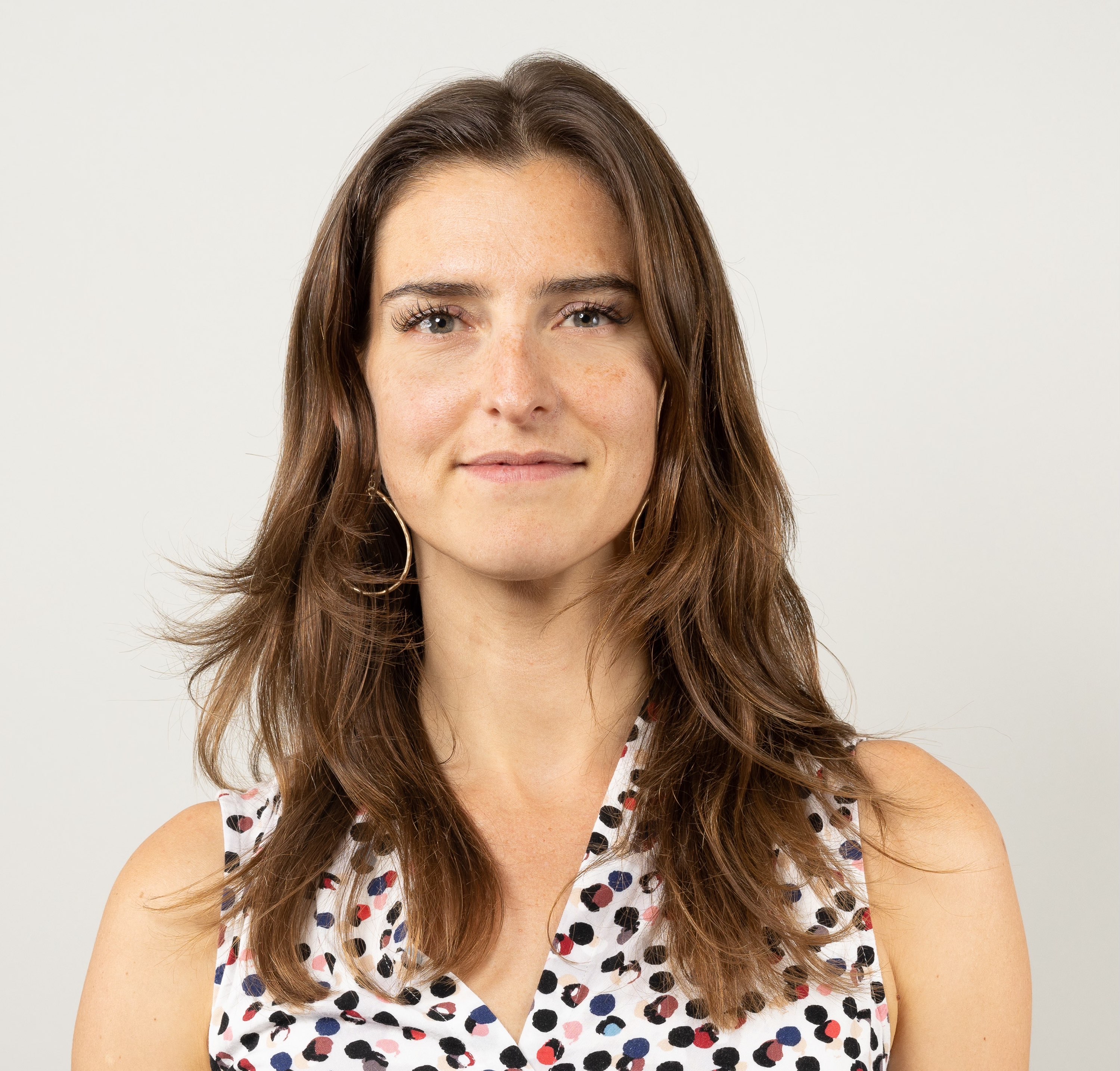

Dr. Robert Califf is one of the most experienced regulatory leaders in American healthcare history. A cardiologist by training, he built the world's largest clinical research coordinating center at Duke, served two separate terms as FDA Commissioner, making him one of the few people to lead the agency twice, spent time at Google's Alphabet, and now publishes widely on Substack and elsewhere on the state of healthcare in the United States and globally.
What makes him worth listening to isn't just the résumé. It's that he has opinions, grounds them in evidence, and delivers them without vitriol, a combination that's rarer than it should be in this space.
This episode covers the referee analogy that frames how Califf thinks about FDA's role, the historical cases that gave rise to medical product regulation, the hardest decisions of his tenure, his view of where the system is under pressure right now, and why AI may be one of the more useful tools for improving regulatory consistency.
[00:00] Opening: The Referee Argument
The episode opens with a clip that sets the frame for everything that follows. Califf on why America has led the world in medical product innovation and reliability:
"Product development is managed by regulators who are career civil servants who are not conflicted. They really are referees. The rules are made by the politicians, like in a sports event, the referees don't make up the rules about what a block and a charge is. There's a rulebook and some discretion within those rules. But the referees apply the rules, hopefully impartially."
This isn't just an analogy. It's the architecture of his entire worldview about what FDA is for and how it should function.
[01:33] Introduction: Who Is Robert Califf?
Shannon opens by laying out the scope of Califf's career: cardiologist, founder of the world's largest clinical trials coordinating center at Duke, two-term FDA Commissioner, a stint at Google's Alphabet, and now a prolific public voice on healthcare policy through Substack and speaking engagements.
What Shannon flags as particularly notable is how he delivers it, opinions on genuinely controversial topics, grounded in specific evidence, without vitriol. That combination, she notes, is why his audience keeps growing.
[01:38] Origin Story: From Basketball Courts to the Commissioner's Office
Shannon asks the obvious question: did he always want to run the FDA? The answer is no, furthest thing from his mind. But two threads in his career kept pulling him toward it.
The first was sports. Califf was an avid athlete and basketball player who also refereed, and he spent a lot of time keeping score. The second was academic cardiology, where he built a coordinating center for clinical trials and outcomes studies. "That's basically refereeing and keeping score."
He also keeps Teddy Roosevelt's Man in the Arena on his wall. Shannon catches the apparent tension: how does a referee relate to being the person in the arena? Califf's answer is that serious refereeing puts you in the arena too. As an undergraduate referee, he was once chased out of a gym by an angry team.
"Referees don't have an easy life. They don't get a lot of credit. In the end, societies and sports depend on honest referees. Otherwise, everything deteriorates."
[04:37] The Commissioner's Job vs. The Center Directors
FDA is structured, Califf explains, something like an academic medical center, departments with their own leaders, their own constituencies, their own budgets. The commissioner's role is to hold that together, not to run the individual centers.
The key distinction he draws: commissioners are political appointees. Center directors are career civil servants who have earned their positions by doing the work. And historically, individual product decisions have been made by those civil servants, not the commissioner.
"The commissioner comes and goes, and the civil servants are always there."
He doesn't sidestep what's happening now. "We can't skirt around the fact that that's been turned upside down in the last year by the current administration."
[07:20] Who Sets the Rules?
Shannon pushes on something important: are regulatory decisions purely scientific, or are some of them values-based? When evidence is incomplete, when populations experience a drug differently, when the tradeoff between access and risk is genuinely ambiguous, isn't that where leadership has to make a call that's more ethical than scientific?
Califf's answer is careful. He'd use the word "cultural beliefs" more than "ethics" for the broader frame, the dominant beliefs of a society reflected through Congress, which passes the laws that set FDA's parameters. The accelerated approval pathways, for example, didn't come from FDA. They came from Congress responding to a dominant public view about rare disease and dying patients who couldn't wait for full evidence packages.
"It's an imperfect system because things change, and there are opinions about how they should change."
[11:14] Why Does the FDA Exist at All?
Shannon asks him to explain it to a middle school classroom. Califf goes to history.
It starts with a horse named Jim. In 1906, a milk wagon horse being used to develop diphtheria antitoxin developed tetanus and killed a number of children. Nobody was watching out for them. The first laws followed.
Then thalidomide, children born with severe birth defects from a drug distributed as free samples. Then the Dalkon Shield, a contraceptive device with a fatal design flaw that caused widespread infections. "The key laws in drugs came in because of the thalidomide disaster. The key laws in devices came in because of the Dalkon Shield."
His framing: consumer products can iterate through failure. Healthcare can't. "If you don't like the tennis shoes you bought, okay, that's tough, don't buy the next pair. If you're dead, you don't have another option."
In health, he said, "we don't want to use human beings as expendable objects of experimentation."
He also flags what's coming: "A lot of talk about AI. We'll have some bad things that happen with AI, and then there'll be some rebound regulation."
[15:34] The Hardest Parts of the Job
Shannon asks what touched him most during his terms, what was hard, surprising, or even delightful.
The hardest thing, he says, was keeping his hands off individual product decisions. He has opinions about medical evidence. There were decisions made during his tenure he would have made differently. But he believes deeply that once political appointees start making individual product decisions, you introduce favoritism and political influence that corrodes the whole system.
The Sarepta case, a controversial drug approval during his first term, is the example he points to. His decision was to say it wasn't his call. "Doesn't mean I agree with it. But I think once a political appointee is in there making decisions, you've got a lot of people trying to influence the commissioner personally. And the commissioner's not going to be there for very long."
He also flags the category of decisions that never make headlines, the hundreds FDA makes every day on products that never reach a final application because they didn't work or showed unexpected toxicity. "Most products never make it to the point of a final application. Those things are happening all the time. Unsung." The companies know about them. The public doesn't. And yet that's where the majority of FDA's actual impact sits.
On anything related to abortion during his tenure: "Impossible. The arguments from Congress are not resolvable by biology or data. They're really based on deep beliefs about when life starts."
[19:01] What Was Delightful
Every day, Califf says. The job is structured like an ICU, you're confronted with difficult situations requiring decisions under imperfect information, and the outcome is determined by whether the team works.
"It's not the doc alone. It's the nurses, the respiratory therapist, the pharmacists, working as a team."
The day he was confirmed for his second term was the day of the Abbott infant formula recall. He was not an expert on infant formula or supply chain management. He became one. "We had teams of experts who did know what they were doing, and these things worked out."
[20:45] A Personal Scientific Thread: Ejection Fraction and Sudden Death
One of the more unexpected turns in the conversation: Shannon mentions her work at Booz Allen on an AI competition to predict left ventricular ejection fraction from 3D MRIs, and Califf connects it directly to his own early research.
As a medical student, he put Holter monitors on 380 patients with documented coronary disease. The death rate was high enough that within a year he had a model to predict sudden death risk. The finding, that ejection fraction was a stronger predictor than ambient arrhythmias, wasn't popular at the time. Everyone expected the Holter monitor data to be the key signal. It wasn't.
"We wrote at the time: if there ever was a treatment for sudden death, the primary issue should be identifying who has a low ejection fraction, not who has ambient arrhythmias."
Years later, that's exactly where ICDs had their biggest impact. His coordinating center ran the trial.
The point for the AI conversation: automated detection of ejection fraction, applied proactively across echo databases, could identify patients who would benefit from procedures like percutaneous valve replacement before they ever present in a clinic asking for help.
"Our system doesn't refer well. Things fall through the cracks."
[26:46] Evidence, Decisions, and What's Under the Iceberg
Shannon raises the quality of FDA review decisions, who's reviewing them, whether reviewers get feedback, whether consistency across offices is achievable.
Califf's view is that it should be a topic of serious study. He notes that the vast majority of what FDA does is invisible to the public: of a hundred programs in drug development, ten make it to clinical studies and one makes it to market. "The tip of the iceberg that people can see are those one out of a thousand that actually make it to the point of an application. Out of those, a very small fraction are controversial. And we're arguing about those."
Understanding what's under the iceberg, the failures, the early decisions, the products that never made it, would give the clearest picture of how the system actually works. Most of that is protected by commercial confidentiality. "But if you want to really know about how to develop a product, it's understanding the failures that would give you the best information."
On consistency across reviewer groups, Califf agrees it's a live problem and one where AI could make a real difference. What used to take weeks to review can now be done in minutes. Not to replace judgment, but to surface what a reviewer may have missed and reach deeper into the literature.
"AI can either be used for tremendous good or tremendous harm, and we've got to figure out how to use it for good."
[34:58] Rapid Fire
Most impactful work over his career? "Developing systems of evidence generation and assessment."
Best part of this conversation? "The discussion of ejection fraction."
Advice for the reviewer listener? "Keep your central compass on being a good referee and playing by the rules. Where you find the rules are insufficient, make noise."
Where to Find Robert Califf
Substack, publishing once a week, and on LinkedIn.
Inside MedTech Innovation is hosted by Shannon Lantzy. Subscribe wherever you get your podcasts.
This content was created with AI assistance from the full episode transcript.


