What MedTech Gets Wrong About "Better": Dr. Adam Cifu on Evidence, Reversal, and the Cost of Early Adoption
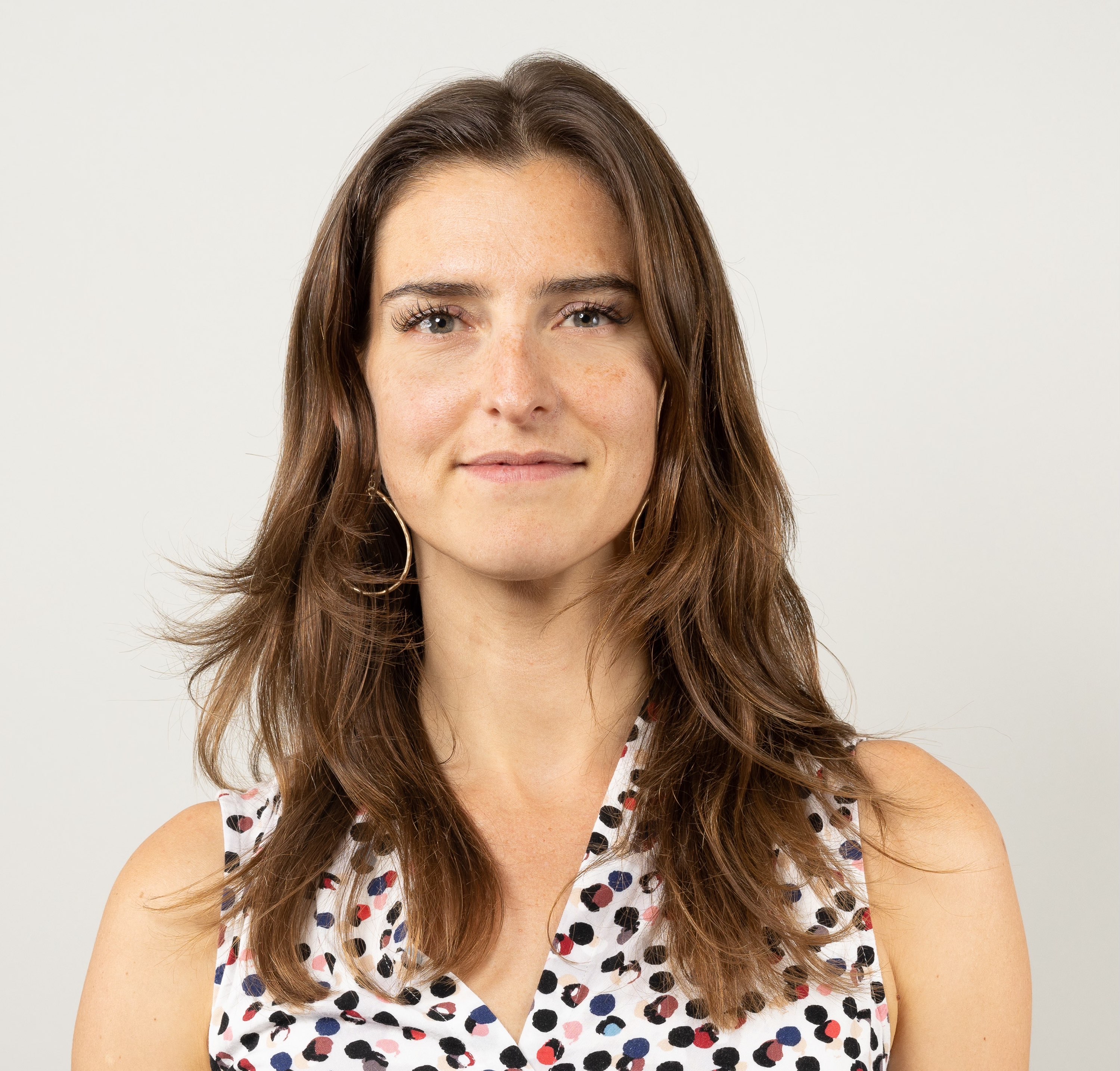

Dr. Adam Cifu is a general internist and professor at the University of Chicago, where he has practiced primary care continuously since 1997. He is the co-author of Ending Medical Reversal, the book that introduced the term to the field, and a co-founder of Sensible Medicine, one of the most widely read independent medical publications in the country. He still sees patients in clinic, still rounds on the inpatient service, and still staffs the urgent care half a day a week — which makes him an unusual breed of academic: one whose theoretical commitments are tested against real patients every Tuesday.
What makes him worth listening to is the combination. He has spent more than a decade defining what happens when medicine adopts a practice on the strength of a good story and thin evidence, deploys it as standard of care, and is then forced to reverse course when better data arrives. He has spent the same decade actually using — and sometimes choosing not to use — the technologies medtech develops. The result is a perspective that is neither anti-innovation nor uncritical. It is, in his own phrase, cautiously innovative. And it is exactly the perspective the medtech industry rarely gets to hear from the people who use its products.
I invited him on the show expecting pushback on medtech. What I got was something more useful: a framework for thinking about when a technology actually serves patients, and when it just gets deployed.
[00:11] What Medical Reversal Actually Means
The first thing to understand is what Adam means by reversal — because it is not the same as a recall, or a failed clinical trial, or a drug being pulled from the market. It is something more specific, and more uncomfortable.
"What we mean by medical reversal," he explained, "is when medicine adopts a practice, usually based on an excellent story, sort of a bioplausible practice, that's then supported by, you know, iffy data, often observational data or small randomized control trials. We go all in, we deploy it, we consider it standard of care. And then later, better evidence comes out — a robust randomized control trial — and tells us, ah, you know, we made the wrong decision."
The practice is widely adopted. The story is compelling. The early data looks supportive. And then it turns out the data was wrong, or thin, or measuring the wrong thing — and the patients who received the intervention in the meantime are owed an apology that medicine almost never delivers.
Adam's interest in this isn't theoretical. He started his independent career in the 1990s, and his formative case of medical reversal is one many readers will recognize.
[00:12] Hormone Replacement Therapy: The Defining Case
"It was standard of care that any postmenopausal woman you saw, you should sort of make the pitch for hormone replacement therapy," he said. "Not because it would help the woman's symptoms, but because it would be beneficial somewhat for her bones, but mostly for cardiovascular prevention going forward."
The Women's Health Initiative results in the early 2000s undid that consensus. "Made it pretty clear," he said, "that we'd gotten the information wrong, that we'd been kind of hoodwinked by observational studies. And the overwhelming benefit in terms of cardiovascular disease really didn't exist."
But Adam's read of HRT today is more nuanced than the headline reversal would suggest. The mistake, he argued, was using a tool as a population-level public health intervention when its real value is at the individual level.
"If you look at estrogen replacement therapy as a tool, personally, for individual women, boy, it makes a whole lot of sense for a bunch of individuals. And it doesn't make any sense for a bunch of other women. And like most medical care, the way to do it is to think about it for the right person, try it on the right person, and if it works, it's beneficial. You stick with it, and if not, you give it up."
This is the move he comes back to again and again across the conversation: the question is never whether a technology works. It is who it works for.
[00:33] The Stent: A Cautionary Tale of Extrapolation
When I asked Adam to give an example of an early-adoption story that went wrong, the one he reached for wasn't a drug. It was a device.
"We learned in the early 2000s that if you present with a heart attack to the hospital, the best thing we can do for you is bring you immediately to the cardiac catheterization lab, open that artery up, put in a stent to keep that artery open. That has absolutely changed medicine."
But then came the extrapolation.
"Because that worked so well, we quickly extrapolated that to a whole lot of less sick patients. And it made perfect sense. There was no question in most people's mind that we should do that — until people actually studied that technology and realized that it wasn't benefiting them. And in fact, it harmed a lot of people, because they were having procedures and artificial metal bodies put in their arteries."
The stent is the clearest case of a pattern Adam sees everywhere in modern medtech: a device proves itself in the sickest patients, the data is compelling, the use case quietly expands to people who were never studied — and the harm shows up years later, in patients who were never going to benefit in the first place.
His instinct about new technology in medicine, he said, is to be optimistic — "that's how we move forward." But then, "we should really make sure that it's paying the dividends that we expect. And it's difficult because, as you know, the creators of that technology often have some conflicts involved."
[00:46] AFib Detection on the Apple Watch: Who It Helps, Who It Harms
The same logic applies, in real time, to one of the most aggressively marketed features in consumer wearables: passive AFib detection on the Apple Watch.
Adam's view on this is not a single verdict. It is two opposite verdicts, depending entirely on the patient.
For the symptomatic patient — someone with palpitations, shortness of breath, an unexplained pounding in the chest — passive monitoring is genuinely useful.
"If I can have them pick up an Apple Watch and wear that all the time, and say, hey, listen, when you feel this, sit down, get an EKG, email me that PDF — and people do that all the time, even the least tech-savvy people in the world — that's incredibly helpful. Because either, oh look, they do have AFib, and that person actually needs to be treated because they're symptomatic. Or I get to reassure them and say, listen, your palpitations are because you're so darn deconditioned."
For the asymptomatic patient with low-burden AFib — a perfectly healthy person who happens to spend a few minutes per month in atrial fibrillation — the same feature is, in his judgment, a net harm.
"Those people are actually being harmed, because then they are aware of a diagnosis that they truly don't need to be diagnosed with. Most of these people, given the decision tools we have, are at such low risk of stroke that putting them on blood thinner — our primary preventative therapy — is not necessary. So those people are now diagnosed as patients with atrial fibrillation, and they don't need to be. And they're probably anxious about it for no reason, and they're at risk of being prescribed an anticoagulant, which has side effects."
This is the structural problem with consumer-grade diagnostics. The same technology is simultaneously a useful clinical tool and a manufacturer of patients-who-shouldn't-be-patients. Whether it does good or harm depends almost entirely on the prior probability of disease in the person wearing it — which is a piece of information the device cannot know.
[00:43] The Whoop Controversy: When Is Blood Pressure a Medical Diagnosis?
I asked Adam about a specific case I'd been following: the FDA's warning letter to Whoop over its blood pressure feature, in which the agency took the position that blood pressure measurement is inherently a medical diagnosis and therefore subject to 510(k) review. Whoop disagrees.
Adam's read of the underlying clinical question was clearer than either side's marketing position.
"If Whoop was marketing this as a screening tool — one of our biggest problems is that hypertension remains underdiagnosed. There are an enormous number of people in the country with hypertension who shockingly don't even know about it. And unlike AFib detection, I would be very confident saying that if we could diagnose the undiagnosed people with hypertension, we would actually really improve health."
In other words: the population-screening case for consumer blood pressure monitoring is stronger than the population-screening case for AFib detection — because diagnosed hypertension reliably benefits from treatment, while diagnosed low-burden AFib often doesn't. The clinical math is different even when the device-marketing math looks similar.
He also pushed back on the precision-obsession that often dominates these arguments.
"How good does it need to be? Blood pressure — we get all freaked out about, is this person's blood pressure under 130 or under 140? But these are all a continuous variable, and the dichotomizing of those variables is kind of ridiculous. Measures that could be within five or ten points for blood pressure — that may very well be good enough, especially compared to getting your blood pressure checked in your doctor's office once every six weeks, or doing it at home with a crappy cuff while your kid is yelling at you."
The argument over device accuracy, in his view, is often a proxy for an argument about something else — usually liability, sometimes incumbency.
[00:53] AI in Primary Care: What Gets Lost in the Avatar
The conversation eventually turned to AI in primary care, and to a question I have been wanting to ask Adam in particular: would he train an "Adam Cifu AI" — a model on his decision-making, his style, his judgment, that could deliver his version of care at scale?
His answer surprised me, though it shouldn't have.
"I personally certainly can't see going and sitting in a room with an avatar and finding that therapeutic in any way, even if I left the room with the same prescription. Maybe I'm living under a rock and that's ridiculous, and a hundred years from now people are gonna be like, the hell would I want to talk to an actual human being about this? It's private. That's crazy."
The point underneath the answer is the one medtech builders most often miss when they talk about AI in clinical care. If your benchmark for an AI primary care visit is "same prescription, faster," you are solving the wrong problem. The prescription was never the whole point of the visit. Adam's practice, by his own description, is information-dependent — and the most therapeutic information he provides is often the conversation itself, not the diagnostic output that emerges from it.
He's not anti-AI in clinical settings. He uses decision-support tools when he's working outside his comfort zone, and his colleagues use AI documentation tools that he himself doesn't need only because thirty years of practice have made his charting faster than the tool.
"The documentation tools for AI — their uptake has clearly been generational. And it's not because I'm not comfortable with technology. It's because they actually don't help me at all, because I'm so at the place that, like, it takes me 30 seconds to document the visit."
The tool is useful when it solves a real friction. It is not useful when it solves an imaginary one.
[00:59] When a Test Won't Change Management
One of the sharpest moments in the conversation came when I told Adam about a time a PA recommended a chest X-ray for my then-husband, and I — having read enough to be dangerous — asked whether the result would change management. Her answer was, effectively, no.
Adam's response was direct.
"I am very concerned about overuse. Personally, doing tests to assuage anxiety I generally feel like is the wrong thing to do. And it's also very lazy, because it's generally a conversation like, look, this is what I'm looking for, there's a 0.02% chance this is there, I'm just trying to be careful. An intelligent patient will say, okay, yeah, it's worth waiting for. Or, that's silly, I gotta get back on the road, and if I'm still having problems in three days when I'm home, I'll go get the damn X-ray."
The harder discipline — and the one most diagnostic device companies don't build into their marketing — is the discipline of not ordering the test. A diagnostic that doesn't change management is not a diagnostic. It is reassurance, and someone is paying for it.
He was careful to add the counterweight. Bedside ultrasound, he said, has unambiguously improved patient care over the course of his career.
"There are procedures that I did routinely during residency blind, you know, with my fingers and a needle, that nobody in a million years would think of doing that now, because you need to walk down the hall, grab a bedside ultrasound, and see exactly where the needle's going."
The principle is consistent: make technology available when it helps patient care, when it makes patient care safer. Don't make it available just so it gets used.
[01:00] What He Hopes Changes at FDA
Adam has a perspective on FDA that most academic physicians don't — because his longtime collaborator on Sensible Medicine, Dr. Vinay Prasad, currently leads FDA's Center for Biologics. I asked him what he hopes the agency does differently.
"I hope that regulation becomes more evidence-based — that we generally need better evidence that treatments, devices, diagnostics are beneficial to patients before they're approved and deployed."
He named the COVID vaccine decision as an example of the model he'd like to see more of: the agency saying, for the populations where the data is clear, keep doing what we're doing; for the populations where the data is genuinely confused, produce the data and let us make a decision.
"I think that's a good way to go. Better than me — the pressures against that are enormous. The lobbying from drug makers, device makers, sometimes directly, sometimes through political actors, sometimes through patient groups, is enormous. And it's gonna be difficult to make any real changes."
The deeper question he raised was about who should bear the risk of unproven technologies. The answer he landed on was clear.
"I think innovation should take place in a way that is clearly being studied. I think putting things out there into the public so people can make money and companies can survive and continue to innovate is not what our healthcare dollars should be spent on. Our healthcare dollars should be spent on treatments that work for people. And the investment in development should be the investors who are invested in that development. And if it works, they're gonna make a lot of money on it, and they should, because they've taken risks on developing things."
This is the part of the conversation that should sit longest with medtech builders. The risk of bringing an unproven device to market belongs to the investors who took it. Not to Medicare, not to private insurance, not to the patients who become inadvertent beta testers when coverage extends to populations that were never studied.
[01:06] Surgical Devices and the Reversal Risk
The same logic, Adam said, applies to medical devices in surgery — and he flagged surgery as one of the highest-risk areas for reversal still operating today.
"There's just fast evolution of surgical techniques, and do those go through randomized control trials? Absolutely not. It's like, does this feel like it works? And so there is great risk there. And I think we have to do a better job of letting patient outcomes drive those developments, rather than kind of money and what surgeons think they want."
The pattern is the same one that ran through every example in the conversation. A technique looks compelling. The early evidence is supportive. Adoption expands faster than the evidence base can support. The patients who were never going to benefit, but received the intervention anyway, are the ones who pay.
What This Means for the People Building Medtech
I came into this conversation expecting Adam to be a skeptic. He is not. He is something more useful: a careful evaluator with a thirty-year time horizon, who has watched dozens of "better" technologies fail to deliver on the dividends they promised, and who has watched a smaller number genuinely transform care.
The framework he handed me by the end of the conversation is simple enough to fit on a single line, and disciplined enough that very few people in medtech actually follow it:
The question is never whether the technology works. The question is always who it's for — and whether anyone is still studying it after approval.
The MedTech industry has internalized the first half of that question. It has not yet internalized the second.
Listen to the full episode: [episode link]
Connect with Adam: LinkedIn: https://www.linkedin.com/in/adam-cifu-bbb8ba206/ Sensible Medicine: https://www.sensible-med.com/
This content was created with AI assistance from the full episode transcript.


