When Healthcare Becomes Personal: How One Founder Built AI for Cancer After His Own Diagnosis
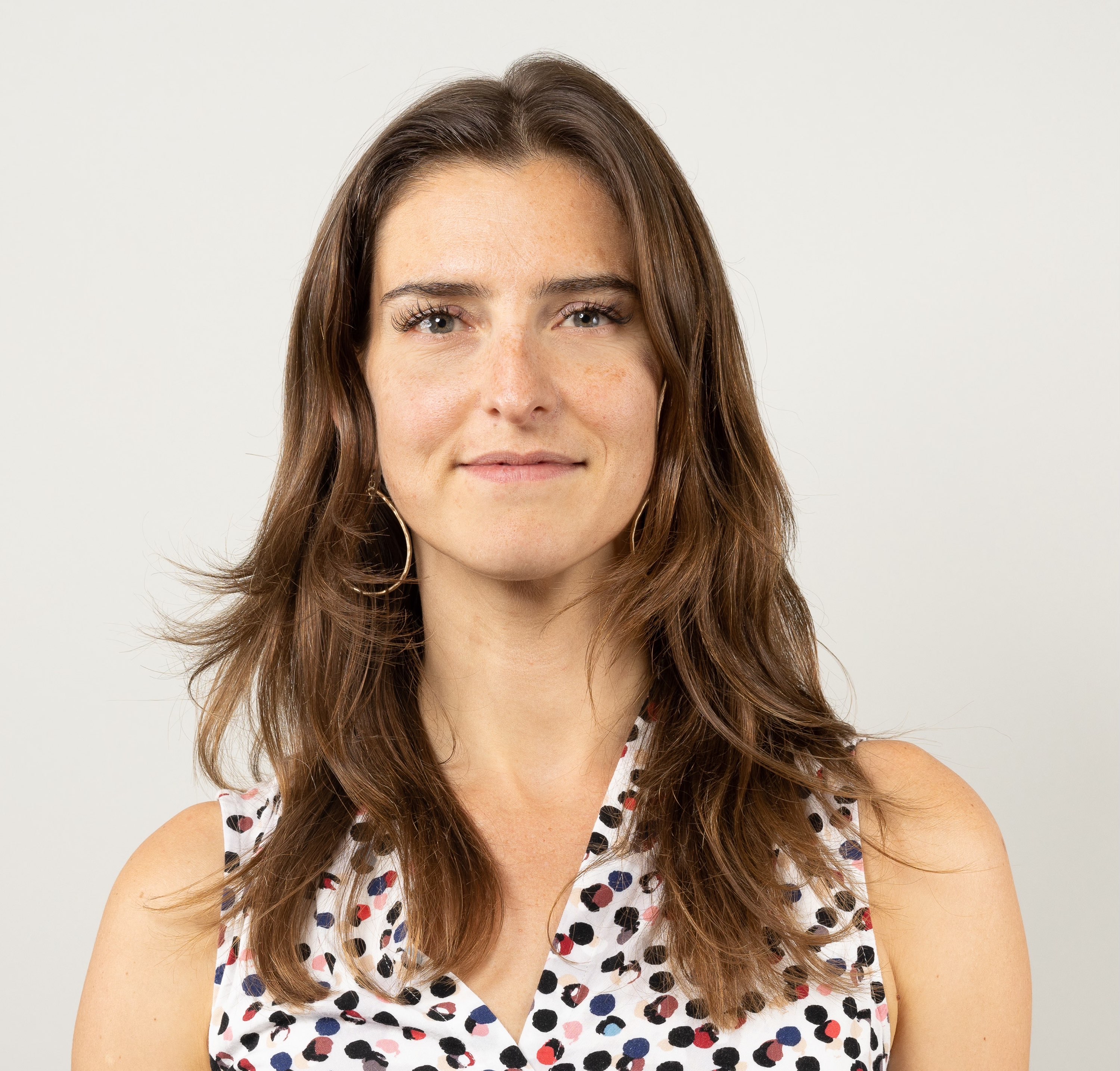

What happens when a healthcare pioneer becomes the patient? When someone who spent decades building remote patient monitoring systems suddenly needs those very systems to save his own life?
This is the story of Steve Brown—founder and CEO of CureWise, digital health pioneer, and cancer patient who nearly missed his own diagnosis. Until the Palisades Fire saved his life.
Steve's journey from creating video games for kids with diabetes in the 1990s to building AI-powered cancer guidance today reveals something fundamental about innovation: sometimes the most transformative breakthroughs come from those who live the problem they're solving.
The Fire That Changed Everything (01:00)
In early 2025, Steve Brown was 60 years old and not feeling right. He'd lost significant weight. Tests kept coming back abnormal. But his doctors kept dismissing the signals.
"Maybe it's just stress or depression," his cardiologist suggested. His gastroenterologist? "Maybe it's just gas. Take Gas-X."
Then the Palisades Fire burned down his house—along with about 10,000 others in Los Angeles. Displaced to Palm Desert, staying with friends, Steve went out for a steak dinner. By Monday morning, he was in severe abdominal pain in an emergency room far from his usual doctors.
This displacement—this accident of geography—likely saved his life.
"I asked for a CT scan to rule out obstruction," Steve told me. The hospitalist who reviewed it didn't match what he saw with Steve's records from just weeks earlier. "I think somebody switched your record," the doctor said initially, "because what we see doesn't look anything like that."
Nine days and multiple biopsies later: a rare and aggressive blood cancer related to multiple myeloma. The kind that creates toxic misfolded proteins that destroy your organs. The kind that usually presents as heart failure because it's already caused heart damage.
"The fire saved my life," Steve reflected. "It was a different perspective on the fire—a one-two punch. We lost our house, but that led to an earlier diagnosis before I'd had a lot of damage."
From Video Games to Vital Signs (02:00)
Steve's path to this moment started decades ago with a simple question: what if we could harness the behavioral power of video games for healthcare?
"Kids would play video games for hours without anybody telling them to do it," Steve explained. "What if we could change the game mechanic to be diabetes or asthma? Could we insert healthcare into this behavioral technology?"
This was pre-internet—or really early internet—when games required actual cartridges for the Super Nintendo Entertainment System. The business model was challenging for a niche like children with diabetes, but the concept lived on. Today we call it digital therapeutics.
That evolved into Health Hero Network, one of the first remote patient monitoring companies. They created Health Buddy—a daily check-in system for veterans with conditions like congestive heart failure. Steve testified before Congress to get disease management language into an Act of Congress (not a metaphor—an actual Act of Congress) to create the market for what they were building.
He still remembers Wally—a veteran living alone, bouncing in and out of the hospital with congestive heart failure. "We work for Wally," Steve told his team. "This is our mission as a company. Who do you serve?"
Eventually Health Hero Network was sold to Bosch. Steve left healthcare for 15 years, did other tech startups (one acquired by Apple), became a filmmaker for a decade. He explored everything from astrophysics with Nobel Prize winners to Syrian refugee stories to the founder of Burning Man.
But healthcare—the biggest problem in the biggest industry—pulled him back. This time, it was personal.
AI Agents as Diagnostic Detectives (14:00)
Sitting in the hospital with his cancer diagnosis, Steve's first thought wasn't about building a company. It was about understanding what went wrong.
"Why didn't they find anything two weeks ago?" he wondered. "It's not right that something would change that fast in such a short amount of time."
Steve had been working on AI agents before his diagnosis—character-driven agents that could debate each other, exploring knowledge by taking different points of view. He'd demonstrated Aristotle, Socrates, and Plato debating at Peter Diamandis's Abundance 360 conference.
Now he turned those agents on his own medical record. Instead of philosophers, he modeled them on medical specialists: hematologists, oncologists, cardiologists, gastroenterologists. He fed them his data from before his diagnosis—the exact same data his prior doctors had reviewed.
"It very quickly converged onto exactly the diagnosis that I had," Steve told me.
If he'd had this tool a year earlier, he would have been diagnosed a year earlier.
The Architecture of Medical Knowledge (16:00)
What makes this work? Steve describes foundation models like GPT, Claude, Gemini as "compression algorithms for knowledge"—all of human medical knowledge compressed into massive neural networks.
"Every doctor right now has access to PubMed and everything that's ever written about medicine," Steve explained. "That doesn't mean they know how to apply it to your case."
The key is what he calls "context engineering"—feeding the AI not just a question, but hundreds of pages of organized medical data along with specific personas and perspectives.
"My question often is: given all of Steve's medical record, and given now your context as a hematologist with a certain point of view and training, what do you think's going on?"
The agents don't diagnose. They do differential diagnosis—suggesting what could be happening and what tests would rule things in or out. Steve's swarm of agents with different specialties converged on a recommendation: get a serum free light chains test, followed potentially by a bone marrow biopsy.
"If I had asked for those tests, the doctors would've done them," Steve noted. "They'd be like, 'Oh, that's a good idea.'"
Precision Medicine Meets Personal Medicine (20:00)
Steve's cancer journey didn't end with diagnosis. His doctors initially prescribed the standard of care—a cocktail of immunotherapies and chemotherapies. But Steve's AI analysis, combined with the genetic profiling of his cancer cells, suggested something different.
"I could tell from the cytogenetics that maybe for me, the standard of care was not going to be the best treatment option," he explained. "Normally doctors say, 'We're gonna do the standard of care for six months until it fails, and then we'll try something else.' I was like, no, I want the best thing first."
Steve sought second, third, and fourth opinions from academic centers of excellence: UCSD, Mayo Clinic, UCSF. He found doctors doing precision medicine based on his specific cancer genetics. They convinced his insurance company to pay for off-label treatment.
"It's very much in the interest of the insurance company that you get the best treatment and don't wait for things to get worse," Steve pointed out.
The results were dramatic. His original therapy was plateauing. The new therapy showed exponential decay of cancer cells down to normal levels. Six months in, Steve is approaching complete response—though he's careful to note he's not out of the woods yet.
This is the promise of precision oncology: treating the million unique diseases that we lump together as "cancer" with targeted therapies matched to each person's genetic variation.
"The ultimate solution to cancer is n of one," Steve said. "We're treating exactly what you have."
The N of One Problem (23:00)
Here's where precision medicine collides with regulatory reality. Medical knowledge has been built on randomized controlled trials—assume everyone is the same, vary one variable at a time, measure the results.
"Now when you get to precision medicine where you have smaller and smaller groups of people, because everybody's unique, you don't have everybody having the same thing anymore," Steve explained. "How do you do a clinical trial on that?"
The answer, as I shared with Steve, involves regulatory innovation. FDA has been working on alternative evidence frameworks—patient preference studies, medical device development tools, drug development tools. There are pathways to qualify characterization methods that can then be used across drug development with FDA confidence.
This was familiar territory for Steve. At Health Hero Network, he'd been through FDA clearance for remote patient monitoring. He'd gotten language into the George W. Bush healthcare reform of 2003.
"I spent a lot of time in Washington, DC," he said with a knowing smile.
What CureWise Actually Does (26:00)
CureWise is in private beta now, with a public launch planned for Q4 2025. The business model starts simple: a consumer subscription service helping people advocate for themselves or their family members.
"We're creating the best tools to help you understand what's going on and what your options are so that you can talk to your doctor," Steve explained.
The workflow begins with uploading your medical record. Then CureWise creates AI agents specialized to your situation—diagnostic agents, treatment option agents, clinical trial matching agents. You can ask: What stage am I at? What should I expect? What should I talk to my doctor about? What's in the pipeline?
"When you have 10 minutes with your doctor, make those 10 minutes really count because you've educated yourself," Steve emphasized.
The platform focuses on cancer initially because cancer is uniquely complex—a million people with "the same" cancer actually have a million completely different diseases. But the methodology applies broadly across healthcare.
Beyond the consumer subscription, Steve sees a research platform emerging. "There's a lot to be developed to bring the vision of precision medicine to reality," he noted. "It's about new ways of dealing with all these otherwise anecdotal case studies of n of one cases. How do we enable AI to learn from that?"
Biopharma companies and payers will be interested in that side of the business—because everyone benefits from precision medicine that gives patients the best possible treatment for their unique disease.
The Democratization of Medical Knowledge (45:00)
When I asked Steve what we missed in our conversation, he emphasized something fundamental: AI is different.
"It's really the first time that we've been able to take all of human knowledge and make it accessible, make it applicable," he said. "We've had all kinds of medical knowledge in PubMed and in all the medical literature. You can search that and find whatever you're looking for, but it's not synthesized. It's a bunch of little pockets of information."
AI synthesizes that knowledge into one corpus, making it democratized and accessible. Some experts might feel threatened by this democratization. But Steve sees it differently.
"It's making everybody smarter and everybody faster. It's this amplifier of human intelligence and human will and intention. We are gonna be able to solve problems that we have just not been able to solve before in healthcare."
The metabolic pace of innovation has changed. In the past, if you had a great idea in healthcare, you'd better dedicate your entire career to it because everything took 20 years. Now?
"This afternoon I'm gonna get educated in this field, I'm gonna find the frontier, and I'm gonna explore what's on the other side of that frontier," Steve said. "So many crazy new things are gonna come out of the fact that smart people are now unleashed on problems that have been intractable for so long."
The Stakes of Getting This Right (44:00)
Steve wrote a blog post about AI regulation with a stark calculation. If overregulation or wrong regulation delays AI-enabled cancer cures by five years, 3.1 million more Americans will die of cancer. That's twice as many deaths as all American wars combined since the Revolutionary War.
"The stakes are really high to get this right," Steve emphasized. "There's a tremendous opportunity right now because AI is so powerful that we can really, for the first time ever, get to precision medicine and precision oncology."
His advice to regulators? Recognize the paradigm shift. Don't just transpose old rules onto a new paradigm.
"The randomized controlled trial has been the paradigm for medical knowledge, but that doesn't work for n of one medicine in the way it worked before," he explained. "Look at the new paradigm, live in that world, and think: if that's just the way things are, how should we look at it to achieve our goal of making the best possible innovations?"
This resonates with what's actually happening at FDA. Dr. Marty Makary, the new FDA Commissioner, is a Johns Hopkins pancreatic cancer surgeon proposing one-month regulatory trials for certain cancer drugs. Michelle Tarver, who leads device approvals at CDRH, literally wrote the guidance on patient-reported outcomes and patient preferences.
The regulatory innovation Steve calls for is already beginning. The question is whether it can move fast enough.
The Real Heroes of Innovation (50:00)
I asked Steve who his heroes are. He started by acknowledging the great Silicon Valley innovators who've tackled seemingly insurmountable problems. But his answer shifted.
"When I became a filmmaker, I learned that the most interesting heroes are when ordinary people become extraordinary," he said. "What I see with AI is so many people from all walks of life diving in and solving problems and becoming heroes in their own domains, doing things they never thought was possible for them."
It's the long tail of innovation—unrecognized but smart people across society empowered to solve the problems in front of them. That's where the real action is.
"Curing cancer really is a moonshot, one of the original moonshots," Steve reflected. "The way to get there is build better tools today. Build the reusable rocket and make it bigger and bigger. We're not doing interior decoration on the Mars base yet. We're building the reusable rocket."
What This Means for You
Steve Brown is literally patient zero for CureWise—using the platform daily to understand his treatment, track his progress, prepare questions for his oncologist. This "building for yourself" approach changes product development in fundamental ways.
"Your perspective changes a little bit when you're building a product that you're using every day," Steve noted.
For patients and caregivers, CureWise represents something new: the ability to have an informed conversation with your doctor even when you don't have a medical degree. The ability to advocate for yourself or your aging parents when doctors dismiss symptoms. The ability to ask the right questions and request the right tests.
For the medical community, it's a transformation in the patient-doctor relationship. Patients will come to appointments educated, prepared, asking sophisticated questions. Doctors will need to engage at a higher level—but they'll also have AI tools making them smarter and faster.
For innovators and regulators, it's a call to recognize the paradigm shift. The old frameworks don't fit the new reality of precision medicine. We need regulatory innovation that matches the pace of technological innovation—without sacrificing safety.
The fire that burned down Steve's house was devastating. But it led him to new doctors with fresh eyes at exactly the right moment. Sometimes adversity creates the conditions for breakthrough.
Now Steve is racing to make that same breakthrough available to everyone facing cancer. Not in 20 years. This year.
Because 3.1 million lives might depend on how fast we move.
Listen to the full episode: [Inside MedTech Innovation - Episode with Steve Brown]
Connect with Steve Brown: Website: https://www.curewise.com
Connect with Shannon Lantzy: LinkedIn: https://www.linkedin.com/in/shannonlantzy/ Website: https://www.shannonlantzy.com/
This episode of Inside MedTech Innovation explores the intersection of AI, precision oncology, and patient advocacy. Topics include how AI agents can perform differential diagnosis, the regulatory challenges of n-of-one medicine, why displaced patients sometimes get better diagnoses, and what it means when a healthcare founder becomes his own first customer.
This post was generated from the full episode transcript with AI assistance to capture and synthesize the key insights from the conversation.


