The Emergency Doctor Who Trained Herself to See What Others Couldn't

What happens when you bring a game-changing technology into medicine—not from a research lab or a regulatory approval, but from watching three colleagues who were simply better doctors because they knew something you didn't?
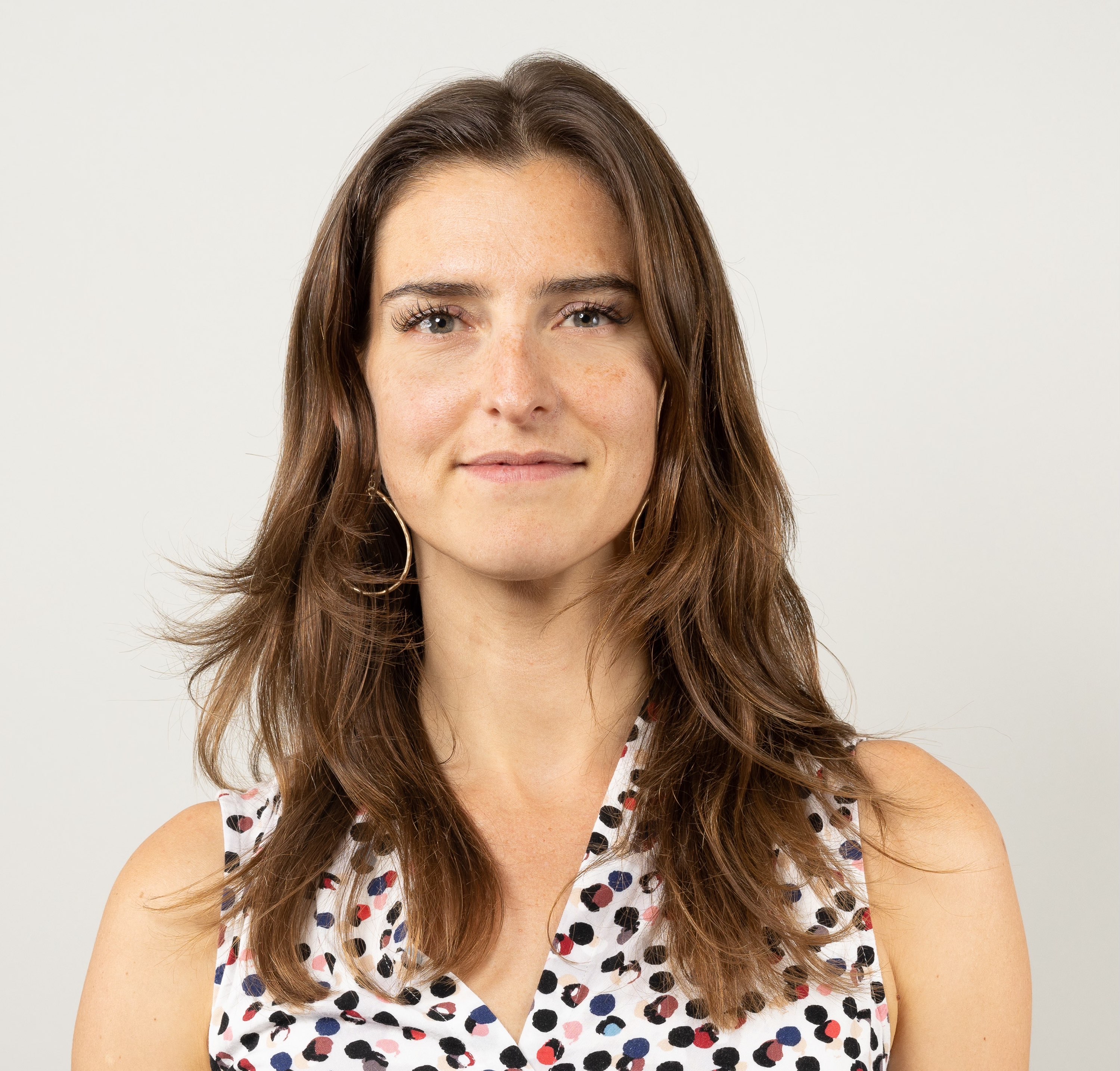
This is the story of Dr. Resa Lewiss—emergency physician, ultrasound pioneer, educator, and author. A woman who defied expectations to become a doctor, then helped transform how emergency medicine is practiced by championing point-of-care ultrasound when it was still considered optional.
Her journey reveals something fundamental about medical innovation: the best tools often spread not through mandates, but through one clinician watching another save a life—and thinking, I need to learn how to do that.
Breaking Expectations Before Breaking Ground (02:00)
Resa Lewiss grew up in a household with traditional gender roles—the kind where boys pursued professional careers and girls were expected to focus on homemaking. But Resa had other plans.
"I would verbalize aloud. I would ask why a lot," she told me. "If my brother was encouraged to do things or allowed to do things and there was sort of resistance to my doing those same things, I would ask why."
She didn't just ask. She pursued the paths she wanted anyway—academic studies, sports, anything that promoted her growth intellectually, physically, and emotionally.
When she finally arrived at medical school, the feeling wasn't entitlement. It was awe.
"I was in suspended animation," Resa recalled. "I could not believe I'm here. I was so excited. I felt the seriousness, I felt the responsibility."
Many of her classmates were children of physicians. They had a sense of "of course I'm here." Resa had something different—the fire of someone who fought to reach a place no one expected her to go.
Finding Emergency Medicine: The Art of Controlled Chaos (06:00)
Resa didn't enter medical school knowing her specialty. She thought surgery might be her path—she loved the procedures, the decisive nature of the work, the culture. But something was off.
"I could tell I didn't love it as much as they did," she explained. "When I looked at the other surgeons, they wanted to be in the operating room and they would avoid being anywhere else."
A gap year at the NIH confirmed she wasn't meant for bench research either. But when she returned for her final year and rotated through the emergency department, everything clicked.
"I see men, I see women, I see children, I see elderly. I get to do procedures, but they're not such long, serious procedures that I go to the operating theater. It felt right."
Emergency medicine attracts a particular type of person—people who want to take control when things go wrong, who thrive in unpredictability.
"The theme about emergency doctors is there's a reason for everybody," Resa noted. "Maybe they played the parent when they were a child. Maybe they had some life-threatening injury or illness. They're like, I want to be the one to take control and calm the room when things are really going bananas."
The Technology That Changes Everything (11:00)
After completing her emergency medicine residency at Harvard, Resa encountered something that would define the next chapter of her career: point-of-care ultrasound.
When she trained, certain procedures were done blind. Central venous lines—the large IVs placed in a patient's neck—were inserted by estimating where the jugular vein should be based on anatomy. You'd stick the needle in and hope you hit vein, not artery.
"With ultrasound, you actually see the artery and you see the vein," Resa explained. "You can guide under direct visualization where your big needle is going."
The evidence became so compelling that ultrasound guidance became the standard of care for central lines. But that was just the beginning.
Consider pregnancy emergencies. When a woman comes to the ER in her first trimester with abdominal pain, the critical question is: where is the pregnancy? If a fertilized egg implants in the fallopian tube instead of the uterus—an ectopic pregnancy—it can be life-threatening.
Before bedside ultrasound, patients had to wait for radiology, which might not be available 24/7. Now, emergency physicians can answer the question immediately: is there a pregnancy in the uterus, yes or no?
"It's a very focused question," Resa emphasized. That focus is the key to point-of-care ultrasound—not comprehensive imaging, but targeted answers that change management in real time.
The FAST Examination: When Speed Saves Lives (25:00)
The original killer application for emergency ultrasound has an appropriately urgent name: the FAST exam—Focused Assessment with Sonography in Trauma.
Before ultrasound, when trauma patients arrived with possible internal bleeding, surgeons would perform diagnostic peritoneal lavage—inserting a needle into the abdomen, flushing in fluid, then withdrawing it to check for blood.
"That invasive procedure was handed off as ultrasound became the point-of-care mainstay," Resa explained.
Now, within minutes of a patient arriving after a car accident or fall, clinicians can scan the abdomen looking for free fluid—most likely blood—from a ruptured organ. The answer guides everything: does this patient need surgery immediately, a CT scan, observation, or transfer to a trauma center?
This is what point-of-care ultrasound does at its best: it provides data exactly when you need it, at the bedside, integrated into the care decision happening in that moment.
Building Programs, Not Just Skills (12:00)
Resa became part of the first fellowship class in ultrasound at Mount Sinai St. Luke's Roosevelt. She stayed for twelve years, eventually leading the ultrasound section.
Building a program means far more than teaching technique. It requires creating education curricula for residents, fellows, and faculty. It means establishing workflow processes so images are properly saved. It demands quality improvement systems to ensure accuracy. And it involves navigating the business side—coding, billing, and documentation.
"That integration of all those pieces is a multi-team, multi-industry system that's required of people at the table to get all that to work," Resa explained.
The integration challenge extends to electronic health records, bioengineering, and information technology. Getting an ultrasound machine to talk to a PACS system (where images are archived), which talks to the EHR (where findings are documented), which enables proper billing—that's healthcare design at its most complex.
Today, point-of-care ultrasound is required for emergency medicine residency graduation. No one can become board-certified without demonstrating competency. That transformation happened over Resa's career—from optional skill to mandatory training.
The Middleware Problem: Hardware Races Ahead (31:00)
When I asked Resa about her wishes for medical technology innovation, I expected her to talk about AI-assisted interpretation or more sophisticated imaging. Instead, she pointed to something far less glamorous but equally critical: middleware.
The ultrasound hardware keeps getting better—smaller devices, better image quality, handheld units you can literally put in your pocket. Some medical schools now give each incoming student their own ultrasound device.
But the software that connects everything? It's lagging.
"The specific software I'm talking about is middleware," Resa explained. "The component that allows the clinician, the patient, and that ultrasound machine to talk to the rest of the hospital—the electronic health record and PACS."
This isn't a sexy problem. It doesn't make headlines. But without solved middleware, you have data silos. Images that don't make it to the patient record. Documentation that requires extra steps. Quality improvement that's harder to track.
"That middleware solution is still a mystery to many places, and there's no one very easy-to-fit solution in these hospital systems."
When Not to Use the Tool (27:00)
Good innovation isn't just about adoption—it's about appropriate use. I asked Resa about cases where ultrasound might be overused or misapplied.
She identified two problems. First: the "quick look" that never gets documented.
"Sometimes clinicians will just do a quick look and they won't actually save images. They won't actually document their findings and integrate it into patient care."
This might reassure the physician in the moment, but it doesn't serve the patient's record or enable quality review.
Second: the unfocused scan that wastes time and resources.
"To just do a focused ultrasound of the gallbladder and the aorta and the kidneys and the bladder and the uterus when someone has abdominal pain—that would be not prudent use of ultrasound at the bedside."
The power of point-of-care ultrasound comes from focus. You take a history, do a physical exam, develop a hypothesis, then use ultrasound to answer a specific question. Not: let me scan everything and see what I find.
Free Open Access Medical Education (36:00)
Resa is a pioneer in what's called FOAM—Free Open Access Medical Education. The concept embraces how adults actually learn: not passive lectures in classrooms, but active, just-in-time learning.
"There's been a progression that just-in-time learning—those chunkable, small teaching moments—can be more effective and more impactful," she explained.
Imagine you're an emergency physician who needs to perform a procedure you haven't done in months. The textbook is on a shelf somewhere. But YouTube? A quick procedural video? That's available right now, on your phone, at the bedside.
"You can now look either up on apps or look up on websites where these education tools are free and open and accessible. Just in time remind yourself, review how to do the procedure, and then actually do the procedure successfully."
This democratization extends globally. Healthcare professionals in resource-limited settings may not have access to expensive journal subscriptions, but they can access free educational content that shares the same knowledge.
Bring Clinicians to the Table (35:00)
Resa's second wish for med tech companies was direct: involve clinicians earlier and more deeply.
"There are many clinicians that are interested in being strategic consultants, strategic partners," she said. "Having lived and worked in the emergency department for 25 years, I have so many experiences and thoughts of how to better the patient care experience, better the clinician experience, better the technology."
She's experienced the brain-picking sessions—quick meetings where companies extract insights without compensation or ongoing involvement. But she's advocating for something deeper: true collaboration in product development.
The gap between what engineers design and what clinicians need is often vast. Bridging it requires more than occasional advisory sessions. It requires clinicians at the table throughout the development process.
The Moment That Almost Wasn't Witnessed (42:00)
I asked Resa about the most impactful work of her career. Her answer wasn't about a program she built or a policy she influenced. It was about a single patient.
"I had a patient come in, he was elderly, he had passed out. People thought it was because he had a stomach infection. I brought the ultrasound to the bedside. I put the ultrasound on his abdomen and I immediately made a lifesaving diagnosis."
Everyone wanted to send him for a CT scan. Resa said no. She called the surgeon. She called the operating room. The man went straight to surgery and walked out of the hospital a few days later.
"I was like, did I imagine that? Did that really happen?"
For over a decade, she wondered if anyone had witnessed the moment. Then, working in a completely different hospital, a physician who had been a resident at the original hospital mentioned it out of nowhere.
"I was there the time you had that patient and you said no," the physician told her.
"Thank you," Resa replied. "I wondered if anybody witnessed that."
This is what point-of-care ultrasound enables—moments where the right tool, in the right hands, at the right time, changes everything. Most of those moments go unwitnessed. But they happen every day in emergency departments because physicians like Resa fought to make ultrasound a standard part of training.
Cooking and Emergency Medicine: The Same Mindset (44:00)
When I asked Resa what she'd do if she had to abandon medicine entirely, her answer surprised me: cooking.
"I actually have always felt that a cook on an assembly line is just like an emergency physician, and they even wear the same clogs."
Think about it: What's burning? What's emergent? What's urgent? What's non-urgent? Managing multiple dishes at different stages, prioritizing constantly, maintaining quality under time pressure—the cognitive demands are remarkably similar.
It's the kind of insight that only comes from someone who's lived both the chaos and the craft of emergency medicine.
What This Means for You
Dr. Resa Lewiss represents a generation of physician-innovators who transformed their specialty from the inside. She didn't just adopt new technology—she built the programs, training, and workflows that made it standard of care.
For healthcare innovators, her story offers several lessons. First, the best advocates for new technology are clinicians who watch other clinicians use it to save lives. Second, implementation requires far more than the device itself—you need workflow integration, documentation systems, and quality improvement processes. Third, middleware and integration may be less exciting than new imaging capabilities, but they're often the real bottleneck.
For patients, point-of-care ultrasound represents something powerful: answers at the bedside, in real time, guiding decisions in the moments that matter most.
And for anyone facing traditional expectations about what they can or can't become—Resa's story is a reminder that asking "why" and pursuing your path anyway can lead somewhere extraordinary.
"Trust your gut," Resa advises. "Because your gut is telling you something that you have to listen to. The times that you ignore your gut, you're gonna have major regrets."
That advice applies professionally and personally. And it applies to the split-second decisions in emergency medicine as much as to the longer arc of a career.
Listen to the full episode: [Inside MedTech Innovation - Episode with Dr. Resa Lewiss]
Connect with Dr. Resa Lewiss:
LinkedIn: Dr. Resa Lewiss
Website: https://www.resalewiss.com/
Connect with Shannon Lantzy: LinkedIn: https://www.linkedin.com/in/shannonlantzy/ Website: https://www.shannonlantzy.com/ This post was generated from the full episode transcript with AI assistance to capture and synthesize the key insights from the conversation.


