The Next Generation of MedTech: A Conversation with Sasha Keck
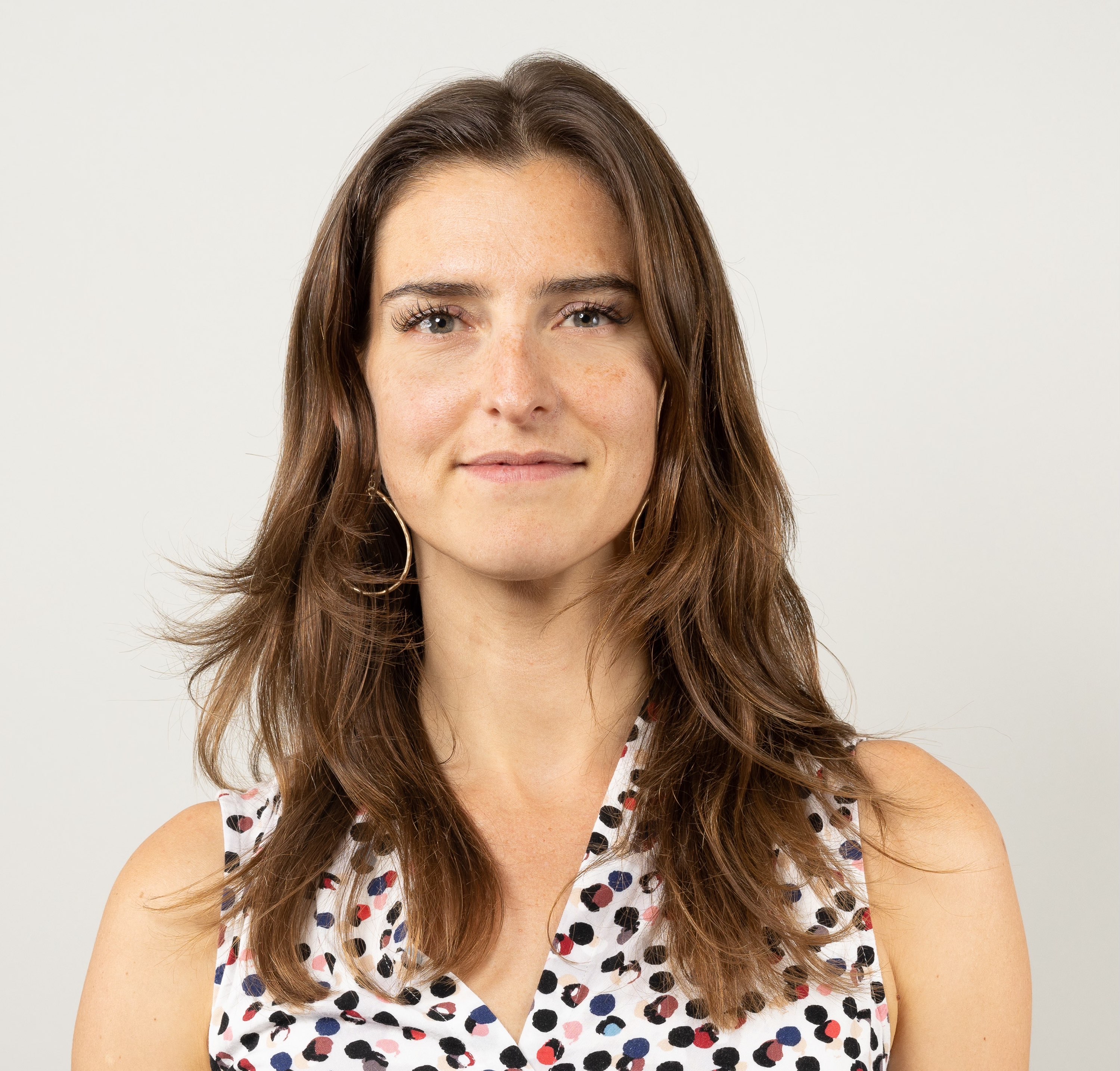

"Younger engineers don't want to work."
I keep hearing this narrative. And then I meet engineers like Sasha Keck.
Sasha is a Technical Development Program Engineer at Edwards Lifesciences. She co-owns a patent for a surgical device she helped invent as a college senior. In our conversation on Inside MedTech Innovation, she shared what it's like to be an early career professional navigating the medtech ecosystem—from being the only girl in her high school engineering class to bridging the gap between R&D innovation and manufacturing reality.
Her generation grew up during a pandemic. They learned to build, iterate, and solve problems in environments that kept shifting. And they're bringing that adaptability to healthcare innovation.
[00:00] The Only Girl in the Room
"I was the only girl in my high school engineering design class, which is crazy. I went to a normal public school and I was the only girl out of 26 students."
Sasha grew up in Mountain View, California—Silicon Valley—where both parents were computer engineers. Despite having engineering in her family, being the lone female student in a class of 26 shaped her early experience with the field.
That isolation could have pushed her away from engineering. Instead, it became part of her origin story.
[02:00] Choosing Rice: Proximity to Real Problems
When Sasha was choosing colleges during her junior year of high school in 2020, everything had just shut down. She was looking for an in-person education in a small environment with exposure to healthcare technologies.
She found Rice University in Houston—right across the street from the Texas Medical Center, the largest medical center in the world with 50 hospitals in a couple square miles.
"I didn't know that I wanted to be next to a Medical Center, but I knew that I wanted students to have the opportunity to work on real world projects. The proximity to a Medical Center meant that a lot of researchers and physicians who had early stage concepts and wanted people to play around in the sandbox could reach out to the school."
This wasn't theoretical engineering education. This was hands-on problem-solving with real clinical needs.
[04:00] Harold and Fred: Where Innovation Begins
Before Rice, Sasha worked on a project that would shape how she thought about design: building mobility devices for paralyzed dogs.
Harold was a little dog paralyzed in his back legs. He was so small that he didn't fit in any commercial mobility devices. Sasha and her team of four high school students built him a custom wheelchair during COVID summer.
Then Fred—a wiener dog states away—needed the same thing. Fred flew to California and ran for the first time in five years.
"It really got me passionate about healthcare because I saw the difference in the quality of life, how happy the little dog was that we were working with. And that's when I kind of realized that if you can positively impact people and animals' quality of life, that's something really important."
Years later, that same problem-solving drive would lead to VacuTrac—a patented surgical device. Sometimes medical breakthroughs start with two dogs and a makerspace.
[10:00] VacuTrac: From Senior Design to Patent
The problem was straightforward: During spinal surgery, surgeons need three tools but only have two hands. They need a retractor to hold tissue out of the way and suction to clear the surgical field. Switching between tools creates risk and extends procedure time.
The team: Four Rice students, two professors, and a neurosurgeon partner.
The process: Hundreds of 3D-printed iterations. One complete redesign in 24 hours based on resident feedback. Learning to balance innovation with clinical usability.
The result: VacuTrac—a device that combines retractor and suction functions into one tool. It could cut spinal surgery exposure time in half and reduce infection risk by minimizing the number of instruments in the surgical field.
Six students now own the intellectual property and are figuring out what comes next with their surgeon partner.
"We had hundreds of 3D printed prototypes and we would go back every single Monday to our grad student that was the liaison with our surgeon and have him try it and be like, is this better? Is it worse? What needs to change?"
This is what happens when universities connect students with real clinical needs.
[15:00] The Economics of Pediatric Devices
One of the most powerful moments in our conversation came when Sasha shared what's hardest about her work: knowing that amazing technologies exist but won't reach everyone who needs them.
"Some of the hardest parts are that it's really hard to make pediatric devices because it's just not as profitable as adult devices. So when you get into very specific niche populations, it can be really difficult to economically justify that."
She mentioned working on a pediatric device that required such small components that manufacturing them at scale wasn't economically viable—even though the clinical need was clear.
She's thinking about health equity at the very beginning of her career. That gives me hope.
[25:00] Learning Arduino with ChatGPT
VacuTrac needed electronics for the suction mechanism. Sasha's mechanical engineering program didn't teach Arduino coding.
So she taught herself using ChatGPT.
"I had to end up learning it from ChatGPT. I would just ask it questions because I had never seen any of this code before and I was like, I just need to know how to make the button make this turn on."
This is the adaptability her generation brings to engineering. When they hit a knowledge gap, they find a way to fill it.
[30:00] R&D vs. Manufacturing Reality
"R&D makes stuff you can't manufacture at scale. They make one crazy thing."
Sasha learned this moving from hundreds of 3D-printed iterations at Rice to manufacturing at Edwards Lifesciences. The challenge isn't just making a device that performs exceptionally—it's making one that can be manufactured consistently by multiple operators.
"Getting to see projects go from an idea of something that a surgeon wants and then making it an actual manufacturable device, I think that's actually like the biggest thing that I've been excited to learn at Edwards."
This is where innovation either becomes a product or stays a prototype. Sasha is learning this at the beginning of her career.
[35:00] The Work Ethic Narrative
When I asked Sasha about the narrative that younger engineers don't want to work, her response was perfect:
"We might not be as vocal about it. You can just see it in the work that we do. We don't have to defend that too much."
She's right. Her generation adapted to unprecedented change as their normal. They learned to build, iterate, and solve problems in environments that kept shifting during a pandemic.
They're bringing that adaptability to medtech.
[40:00] MedTech Women and Mentorship
Sasha and I met through MedTech Women's mentorship program. She spoke about the isolation of being the only woman in many of her engineering spaces—and how mentorship changed that.
"It's been really, really awesome to have older people in industry that I get to talk to and ask for advice and get feedback on my perspective because it's something that I wasn't really exposed to before."
The program connected her with women who had navigated similar paths, creating community where there had been isolation.
[48:00] The Challenge of No End Date
Sasha shared something I hadn't considered: the psychological shift from school to work when there's no defined endpoint.
"I was in an 18 months rotational program. I was in four years of college. I was in four years of high school. Everything has had an end point. And after I finished the rotational program, there is no end date. It's you're in this job until you decide otherwise."
My advice to her: Manufacture that endpoint for yourself. Set two to three-year project goals that give structure even when the formal program ends. It's something I've learned through trial and error across my own career.
[51:00] One Piece of Advice
"If you have younger people in the spaces that you're working in, tell them that you value their opinion, you value their voice, and invite them into the conversation. Sometimes it can be really intimidating when you're the only person on the team under 30, under 40, under 50. It's really difficult to make your voice heard without feeling like you're irritating people."
This is the ask from Sasha to all of us working in medtech: Explicitly invite younger professionals into the conversation. Don't assume they know their perspective is valued. Tell them.
What This Conversation Taught Me
Sasha is at the beginning of her career, but she's already grappling with the same tensions that define medtech innovation:
The gap between R&D creativity and manufacturing constraints. The economics of serving small patient populations. The challenge of making breakthrough technologies accessible to everyone who needs them. The importance of bringing diverse perspectives into engineering spaces.
Her generation isn't asking for permission to innovate. They're teaching themselves Arduino with AI. They're iterating hundreds of prototypes. They're thinking about health equity from day one.
We should listen.
Connect with Sasha: Find her on LinkedIn
Listen to the full episode: [episode link]


