When Insurance Says No: How One Engineer Built AI to Fight Back

A cell-free DNA test during pregnancy. A maxillofacial surgery for a restricted airway. An ovarian cancer treatment. Breast reconstruction after mastectomy.
What do these all have in common? Health insurance denials—even when doctors say the treatment is medically necessary.
We've all heard the stories. Maybe we've lived them. But what if patients and their doctors had the same tools insurers use to deny care? What if advocacy could be powered by AI instead of exhaustion?
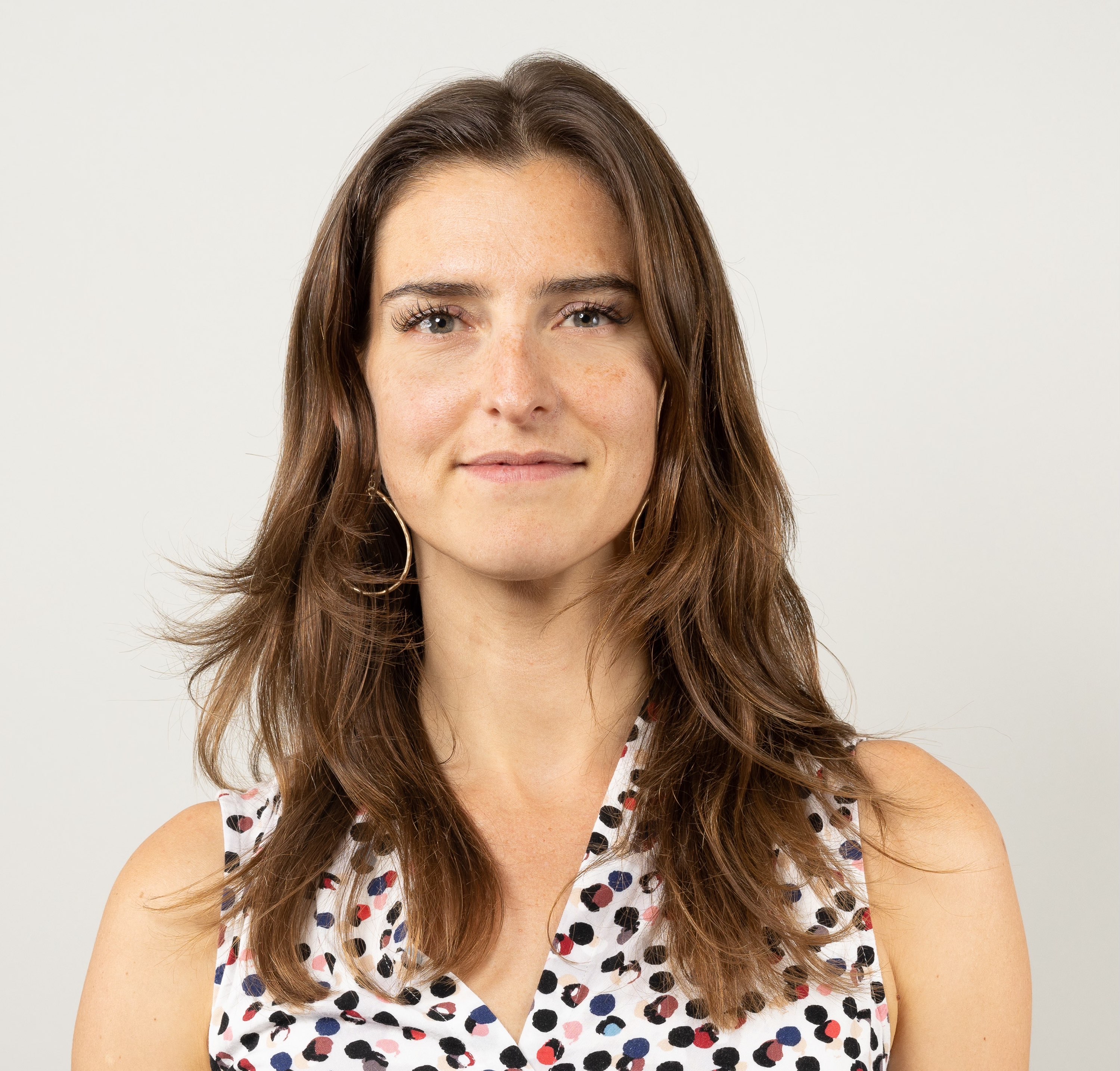
This is the question Hayley King asked when she co-founded Paxos Health. A former Medtronic engineer with four patents and an MBA from Stanford, Hayley has built a company that's secured millions of dollars in coverage for patients with a 90%+ appeals success rate.
Her journey from designing cardiovascular implants to fighting insurance denials reveals something fundamental about healthcare innovation: sometimes the biggest barrier to life-changing technology isn't FDA approval—it's getting someone to pay for it.
The Anonymous Reddit User Who Changed Everything (14:00)
The origin story of Paxos Health sounds almost too perfect to be true.
During Hayley's first year at Stanford Business School, her classmate Alex Lacey told her about needing a $40,000 maxillofacial surgery. His airway was restricted. He couldn't breathe properly. He wasn't sleeping. His doctor said it was medically necessary.
His insurance denied it.
His doctor submitted an appeal. Denied again.
"His physician came to him and said, 'Hey Alex, I really think you need this surgery, but I can't keep putting resources towards this,'" Hayley told me. "'We're a small private practice. I've tried an appeal. There's really not much more that I can do.'"
So Alex did what millions of people do when the healthcare system fails them: he went to Reddit.
He found an anonymous user who had fought a similar denial successfully. That user helped him write an appeal that got approved. Alex got his surgery.
When Alex came to Hayley with the idea of building a company around this, she wasn't initially convinced. "This was the first time I've been like, wow, maybe this is the time for me to try something," she reflected. "I had never really seriously considered" entrepreneurship.
They won the Stanford Impact Design Immersion fellowship, which subsidized them to build a business between their first and second years. Right as they were about to start, they heard about another Stanford student trying to launch a similar company.
Plot twist: it was the same anonymous Reddit user who had helped Alex the year before.
"Wild," was Hayley's understated response when she told me the story.
Two Stanford students, different insurers, same surgery, same denial problem—connected through a Reddit forum because no formal system existed to help patients advocate for themselves.
As my friend Susanna Fox writes in Rebel Health, this is how healthcare actually works for people with invisible needs. They find each other online. They create community. They solve problems the system doesn't address. Then champions and entrepreneurs scale those solutions into businesses.
Paxos Health is that scaling solution.
From Wine Country to Medical Necessity (05:00)
Hayley's path to healthcare entrepreneurship started in her father's metal stamping shop in Indiana.
"I always grew up playing with mechanical components, learning about lathes and mills and all these different ways you could design intricate mechanical components based off something you drew on paper," she explained. "That always fascinated me."
She maximized optionality in college—dual degrees in mechanical and biomedical engineering. "I really didn't know what I wanted to be when I grew up, and I'm still figuring that out today."
After graduation, she joined Medtronic's cardiovascular implant team in Santa Rosa, California. Wine country—not the worst place to start a career.
"I thought you'd have to go to Minneapolis," I interjected.
"I traveled out there a lot," Hayley laughed, "but I got my wine."
One of her early mentors at Medtronic gave her advice that shaped her entire approach: get out and see how the products are actually used in the field.
"From day one, I worked on getting my credentialing done to go out and see surgeries," Hayley said. When a product issue required root cause investigation, she immediately volunteered. "I could go out, see more surgeries, talk to more surgeons, see how the product's being used, and then take that back to the lab, 3D print aortas, and figure out what happened."
The Human Factors Problem (08:00)
What Hayley discovered watching surgeries changed her perspective on medical device design entirely.
Surgeons were using a technique from an older version of the device on the newer version. The devices looked similar, had similar names—but the newer product required a slightly different deployment technique.
"I realized that surgeons were defaulting back to how they had used the original device, which anyone would if that was what your prior experience was and you had good success there," Hayley explained.
In one surgery, she watched a surgeon push the device up to the deployment location, then try to pull it back slightly—a technique that worked with the previous version. With the newer device, it caused the device to fall further than intended.
"Maybe there's something here with physician technique that we could change or update," Hayley realized. They updated the instructions for use and created tips and tricks to prevent that failure mode.
But the experience revealed something deeper: you can't regression test human behavior the way you test software.
"From an engineering perspective, when I was trying to systematize this and create some formula to figure this out, it was really tough," Hayley admitted. They ended up creating 3D printed silicone aortas and testing with mechanical motors at different force levels.
"Historically as an engineer, I'm like, X plus Y equals Z. And here it was like, whoa, there's this human factors element that's really difficult to fully quantify, particularly when you're asking a surgeon to change what they've done historically where they originally had really good success."
This insight—that healthcare involves messy human behavior that doesn't fit neat equations—would prove essential to understanding insurance denials.
The Valley of Death After FDA Approval (38:00)
When Hayley transitioned from engineering to strategy roles at Medtronic, she started seeing the bigger picture of medical device commercialization. After her MBA, when patients and MedTech companies started approaching Paxos for help, she discovered a gap that most engineers never see.
"One of the biggest challenges we see is that in the MedTech space, everyone is very focused on the product development and the innovation side of things," Hayley told me. "Companies put a lot of resources towards getting FDA approval. And then all of a sudden they end up in this valley of death where you have FDA approval, you have all this evidence that your product is great, but patients are still not getting access to it because some of these companies wait too long to be thinking about their patient access and reimbursement strategy."
This valley of death is real and well-documented. Colleagues at Stanford published research showing it takes five to seven years between FDA clearance and widespread reimbursement. FDA even created the Total Product Lifecycle Advisory Program (TAP) to help breakthrough device companies anticipate evidence needs for coding, coverage, and payment.
"It frankly kills companies," Hayley said bluntly. "If you can't get reimbursement, if you can't get people to pay for it, then providers aren't gonna adopt your tool, patients aren't gonna adopt your tool, and the company or the product's not gonna make it."
From Services to Software (19:00)
Paxos didn't start as an AI company. It started with phone calls between classes.
"We took the approach, which I think is less common, of just originally starting working directly with people to understand their problems," Hayley explained. "The insurance process is quite opaque. If we would've gone out and originally just tried to write software to address this issue, we wouldn't have known what the constraints were and what the requirements were."
Classic Paul Graham advice: do things that don't scale.
They worked boots-on-the-ground with patients, calling them between MBA classes, slowly reverse-engineering the insurance approval process. What worked with which insurer? What needed to be included as attachments? Which policies should you cite for different procedures?
"We essentially reverse-engineered what that system was, and then from there started to build software around it," Hayley said.
The AI tool they built today takes a patient's documents, identifies exactly what that specific insurance plan requires based on the patient's information, then builds a justification that makes it easy for the insurance reviewer.
"This letter calls out exactly in order that checklist," Hayley explained. "This is great. Let's go ahead and just approve it."
The system allows the user to check along the way if there's anything they want to double-click on. It's not a black box that generates appeals without human oversight—it's an AI assistant that amplifies human judgment.
The Business Model Evolution (22:00)
Initially, Paxos was consumer-facing. Patients would pay to get help with appeals. But Hayley didn't like that model.
"We didn't like having patients pay," she said simply.
Then MedTech companies started approaching her. Colleagues from Medtronic reached out: "Hayley, I see you're doing this directly with patients. Is there any world in which you would consider doing this to help patients get access to our medical devices?"
This opened up a whole new world—and a better business model.
"We found incentives where medical device companies needed this extra help and really benefited from us helping to get patients access to their treatment and had a willingness to pay," Hayley explained. "That could help subsidize and mean we're able to offer free case reviews to anybody who reaches out about any insurance issue."
The two-sided market works beautifully. MedTech companies need help getting their innovative products reimbursed, especially when they have a Category III code (temporary) rather than Category I (permanent CPT code). Paxos builds custom AI tools specific to each product's reimbursement nuances.
For patients or providers dealing with any one patient's case, they submit information through the system. The AI generates a justification—a prior authorization or appeal letter—that gets sent to the insurer or given to the provider to submit.
Patients typically don't pay. The MedTech companies subsidize the service because they benefit when more patients can access their products.
The Edge Cases That Matter (26:00)
As Paxos has built its dataset of successful appeals, patterns have emerged. Some products consistently get denied as "experimental." In those cases, insurers want more evidence—not about the specific patient, but about the product itself.
"We're working with the MedTech company to say, what other evidence can we be including? What potential new clinical studies or evidence strategies do you have to help overcome some of these challenges?" Hayley explained. "Because until you have enough evidence, insurers are gonna continue to deny."
But here's where it gets interesting: every successful appeal creates a snowball effect.
"For every one case that you get approved, that actually leads to almost like a snowball effect," Hayley told me. "The more insurers are starting to realize and starting to see the evidence and starting to realize this patient does qualify for this, the more likely they are to end up putting that into their coverage policy."
Individual appeals create case law, essentially. They establish precedent. They move companies out of the valley of death faster.
This is where Paxos becomes more than just an appeals service—it's an evidence generation platform. The data they collect on what works could inform FDA's regulatory innovation programs, help companies design better clinical trials, and accelerate the path from breakthrough designation to widespread coverage.
The Overtreatment Question (28:00)
I had to ask the hard question: what if Paxos gets too good at this? Could they inadvertently promote overtreatment?
"It's a really good question," Hayley acknowledged. "As much as we villainize health insurers, there needs to be some level of checks and balances in the system because overtreatment is a real concern."
Paxos approaches this by trying to get to "ground truth"—not arguing for treatments patients don't qualify for, but flagging when patients do meet published criteria that insurers are ignoring.
The tool includes a case assessment feature that alerts users when criteria aren't met. "You actually don't meet this criteria. You should modify this as you see fit and you can ultimately choose to do what you will with this," Hayley explained. "We're gonna stick to kind of logic and criteria and evidence, and that's where we stop and turn it over to experts to take it from there."
This is similar to what Adam Cifu writes about in his Sensible Medicine Substack—when considering a test or treatment, clinicians should ask: "How would this change our management?"
Paxos can flag that a patient technically qualifies for something, but whether it would actually change care? That's for the physician to decide.
Pediatrics and the Double Whammy (33:00)
One area where insurance denials create particularly cruel problems is pediatric care.
"Children are not just small adults," as representatives from Children's Health Networks reminded FDA at a recent public meeting. You can't just take an adult device and get it cleared for pediatric use. But developing pediatric-specific devices isn't profitable, so few companies do it.
The result? Pediatric patients need devices that were only tested in adults. Insurance denies coverage because there's no pediatric evidence.
"In most cases, any drug or medical device is typically tested with adults if there's an opportunity," Hayley confirmed. "Many times it will get denied if a pediatric patient needs access to something and it wasn't part of an FDA trial."
In those cases, Paxos builds arguments acknowledging the evidence gap but emphasizing lack of alternatives. "Really in that situation, that's where AI is convenient in terms of being able to go through and see all of the past step therapies—all the different things this patient has tried in the past and all of the reasons why maybe things they haven't tried are unlikely to work."
It's the "no other options" argument, backed by comprehensive analysis of what's been tried and why alternatives won't work.
The Roller Coaster of Startup Leadership (44:00)
When I asked Hayley what it's like leading a startup, she was characteristically honest.
"It's fun. It's a roller coaster. I love it," she said. "I'm constantly learning every day."
But the transition from Class III medical device engineering to software startup founder required a complete mindset shift.
"I couldn't get anything wrong," Hayley explained about her Medtronic days. "Safety factors were three to 10 times. You check your work so many times, it gets reviewed by 20 other people—and for good reason."
In startup land? "I make a lot of mistakes now. I fail a lot. That was really hard at the start because I was so used to having to get everything right."
She told me about debating payment platforms with Alex, her co-founder. Hayley did a comprehensive analysis with spreadsheets and criteria weights. After a couple hours, she came back with a recommendation.
"This one wins out by 0.1%," she told Alex proudly.
"Hayley, how long did it take you to do this?" Alex asked.
"Just a couple hours."
"No, Hayley, we can't be spending that long on any one decision. We just have to take risks and go for it and move."
I pushed back a bit on Alex's perspective. "Is it possible that through your research you learned what the software can do so that regardless of which one you picked, you would know how the implementation was gonna work?"
"A hundred percent learned things during the process," Hayley agreed. "I think there were probably diminishing returns after the first 15 to 30 minutes."
She and Alex balance each other well. He comes from software and wants to move fast. She comes from medical devices where you have to get everything right. Their third co-founder, Malcolm, sits in the middle.
"We really balance each other out well and have a good relationship where we can give each other feedback," Hayley said. "For this specific thing related to healthcare, we really wanna go harder on making sure this is done absolutely correct. Whereas if it's choosing two different vendors that have a 0.1% difference, maybe that's a scenario where I should not be spending as much time."
I offered her a framework I've been using: intolerable failures versus tolerable failures. With medical devices, shipping an intolerable failure could kill someone. With consumer software, failure is annoying but not fatal. CrowdStrike killed computers worldwide when they shipped a bad update, but nobody died.
"I love that framework. I'm gonna steal that," Hayley laughed. "When I go back to Alex, I'm gonna be like, 'This is an intolerable failure. We need to make sure we go harder on this one.' And then he can call me out when this is tolerable."
The First Win (01:00:00)
I asked Hayley about her most gratifying experience so far.
"The very first appeal I won," she said without hesitation.
It was early days, when they were still just exploring whether this could work. A client reached out through Reddit—the same forum where Alex and Malcolm had originally connected.
The client needed maxillofacial surgery similar to what Alex had needed. He wasn't sleeping. His doctor said he couldn't drive anymore because sleep deprivation made it dangerous. He'd found an innovative surgery that could help.
His insurance denied it.
Hayley put blood, sweat, and tears into the first appeal. It lost.
They pushed to external review—an independent organization separate from the insurance company that should provide less biased evaluation.
They won.
"It was almost like an extra level of gratification," Hayley reflected. "The insurer still said no, but then we got an independent group to agree with us that this client needed access to this life-changing treatment."
Now the client texts her occasionally. "Hey, just wanted to say I'm doing great and I'm able to drive again. I'm able to do the things in my life that I wanted to be able to get back to."
That fuel—those messages—keeps you going through anything that seems hard.
AI Fighting AI (56:00)
One question Paxos gets asked frequently: won't this just become AI fighting AI? If insurers use AI to deny faster, and patients use AI to appeal, doesn't that create an arms race where nobody wins?
Hayley sees it differently.
"Although algorithms can be biased, I do think we're gonna get closer to ground truths the more that we utilize technology," she told me.
Consider the current system. Articles keep coming out about medical directors at insurance companies being told to approve or deny cases within six seconds to hit their volume targets. Whistleblower cases reveal the pressure on human reviewers.
"Six seconds—AI can actually check in six seconds," Hayley pointed out. "If it's set up in the right way, that actually could help a patient get access to care much faster than having a human have to sit there and review for five hours every single case."
The AI fighting AI framing is "an inflammatory sort of topic," Hayley acknowledged. "But I actually think we're working towards a ground truth. Although we'll have biases along the way and although it's not perfect, I think there's an opportunity for AI to help patients get access to care in a more efficient and quicker way."
There should always be humans in the loop—Paxos designs their system that way. But AI as a tool for both sides might actually create more consistency and fairness than the current system of overwhelmed humans making split-second decisions under productivity pressure.
What Comes Next
Paxos Health is at an inflection point. They've proven the model works with a 90%+ appeals success rate. They've built custom AI tools for specific MedTech products. They offer free case reviews for any patient facing insurance denials.
Now they're thinking about partnerships across the patient journey. Before Paxos handles the appeal, someone needs to make the initial diagnosis. After successful coverage approval, someone needs to help patients navigate treatment. There are opportunities to collaborate with diagnostic companies (like Steve Brown's Curewise), patient advocacy groups, and healthcare litigation attorneys for truly egregious cases.
Hayley's advice for MedTech startup founders? "The companies that end up being the most successful in the commercialization phase are those that think about reimbursement strategy early on and have a plan for what they're going to do for getting coding, coverage, and payment. Don't save it until after FDA approval."
This isn't just startup advice—it's a call for systemic change. We celebrate FDA approvals. We put resources into product development and clinical trials. But if we don't think about reimbursement from the design stage, we end up with life-changing technologies that patients can't access.
The Reddit Connection
Throughout Hayley's story, Reddit keeps appearing as the informal infrastructure holding together a broken formal system. Alex found help there. The anonymous user who helped him ended up being a Stanford classmate building the same business. Hayley's first client found them through Reddit.
This pattern reveals something profound about healthcare innovation. The official channels—insurance companies, clinical guidelines, reimbursement codes—create friction and deny access. So people create workarounds. They find each other online. They share information. They help each other navigate systems designed to say no.
Paxos is scaling what was happening organically on Reddit forums. They're taking the informal knowledge of how to successfully appeal denials and encoding it into software that more people can access. They're giving patients and doctors the same AI tools that insurers use to deny care.
Less than 1% of patients appeal their denials. But over 40% of appeals succeed.
If you've been denied, if you're willing to put in the time, there's a pretty good chance of success. Paxos just makes that success more accessible.
For everyone who's ever been told their medically necessary treatment isn't covered. For everyone who's spent hours on hold with insurance companies. For everyone who's watched a loved one suffer because they couldn't navigate the bureaucracy.
This is for you.
Listen to the full episode: [Inside MedTech Innovation - Episode with Hayley King]
Connect with Hayley King: LinkedIn: Haley King Website: Paxos Health
Connect with Shannon Lantzy: LinkedIn: https://www.linkedin.com/in/shannonlantzy/ Website: https://www.shannonlantzy.com/
This episode of Inside MedTech Innovation explores how AI can level the playing field between patients and insurance companies. Topics include the valley of death after FDA approval, why reimbursement strategy should start at the design stage, pediatric device coverage challenges, and why AI versus AI might actually create fairer outcomes than the current system.
This post was generated from the full episode transcript with AI assistance to capture and synthesize the key insights from the conversation.


